




Join Djinn Guide: Get 50% Off a Personal Reading
Get new guides to jinn, folklore and occult history. Confirm your subscription to unlock a 50% code for a first personal reading with our partner PuraTarot.
Discover the unseen
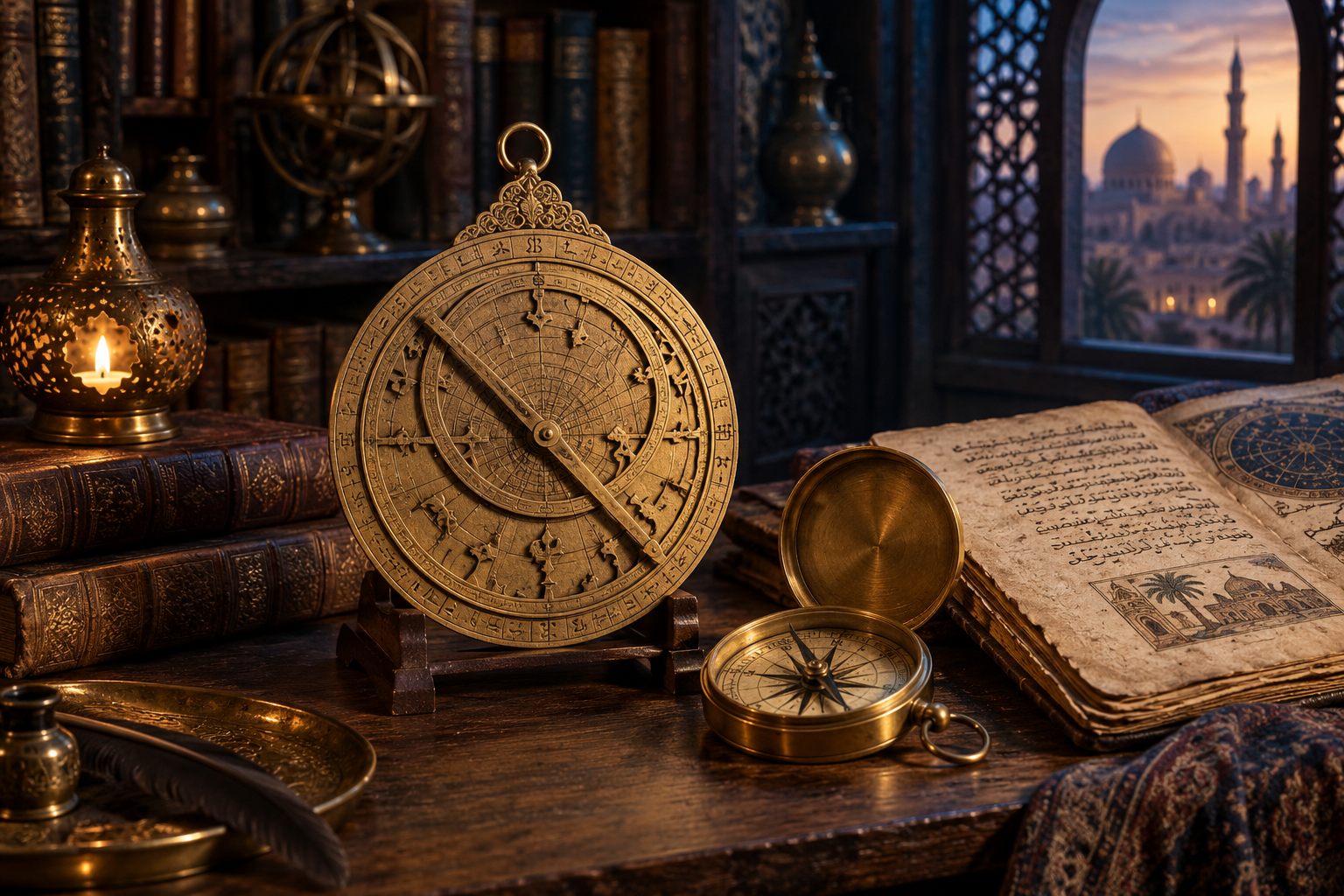
Amulet vs talisman: an amulet is believed to protect, a talisman to attract or empower. Learn what each word means and their history from Egypt to taweez.
Quick answer: The difference between an amulet and a talisman is one of purpose. An amulet is an object believed to ward off harm, such as the evil eye or illness, and works simply by being worn or kept. A talisman is an object believed to attract a specific benefit or power, and is traditionally made at a chosen time with inscriptions or symbols. In practice the two words overlap heavily, and many historical objects were understood as both.
Related guides: occult symbols and their meanings, the Seal of Solomon in history, Ethiopian magic scrolls and the Net of Solomon, what a sigil is, the Picatrix and astrological talismans, what tradition says repels jinn.
| Feature | Amulet | Talisman |
|---|---|---|
| Word origin | Latin amuletum, used by Pliny the Elder | Arabic tilasm, from Greek telesma, a consecrated thing |
| Main purpose | Protection; turning harm away | Attraction; drawing in a benefit or power |
| How it is believed to work | By its material or form, often natural or inherited | By inscription, symbol and the timing of its making |
| Typical form | Stone, tooth, bead, hand, eye, folded verse | Engraved metal disc, ring, magic square, written formula |
| Classic examples | Eye of Horus, nazar bead, hamsa, taweez | Planetary seals, Solomon's ring, Picatrix images |
| Who makes it | Anyone; often bought or handed down | A specialist, following a text and a chosen hour |
Key Takeaways
Amulet meaning is simple at its root. The English word comes from the Latin amuletum, which the Roman writer Pliny the Elder used in the first century CE for objects worn to avert harm. Its deeper origin is uncertain. What has stayed stable is the sense: an amulet is something kept close to the body or the home because it is believed to keep danger away.
Talisman meaning carries more history inside it. The word entered English in the seventeenth century from French and Spanish, which took it from Arabic tilasm, which in turn came from the Greek telesma, a thing consecrated or completed through a rite. In Arabic and Persian, tilasm came to mean an object inscribed with figures or names under astrological conditions so that it would carry a power. That is why dictionaries describe a talisman as an object believed to attract good fortune or influence rather than only block harm.
So the short answer to amulet vs talisman is a contrast between defense and attraction, between a thing that works by being what it is and a thing that works because of what was done to it. Scholars of magic use the distinction as a convenience, not a law, since many objects were made to do both.
The defend-versus-attract rule is useful but modern. Ancient and medieval users did not always separate the two. An Egyptian scarab was worn for protection and for the regeneration it symbolized. A Roman phallic charm warded off the evil eye and was also thought to bring luck. A ring engraved with Solomon’s seal was carried to repel spirits and to command them. Nineteenth-century writers popularized the neat division, and it stuck because it is easy to remember.
A second axis is often more revealing than purpose: how the object was believed to work. Amulets tend to depend on substance, shape or origin. A coral bead, a wolf’s tooth, a blue glass eye or a piece of iron is thought to have its property by nature. Talismans tend to depend on process. The maker chooses a planetary hour, engraves a seal or name, and may recite something over it. The object becomes a talisman through craft and timing.
Seen this way, the same physical thing can shift category. A plain silver disc is neither. Engraved with a magic square at a chosen hour it becomes a talisman. Handed down in a family as the thing that kept grandmother safe, the engraved disc becomes an amulet again. The categories describe beliefs about objects, not the objects themselves.
Does this touch your own situation? Many readers come to these pages because something in their home, dreams or family feels unexplained. Reading history helps, but it cannot look at your specific case.
Consult the Sheikh Private, confidential, and free to ask.
Egypt produced the richest early record. Amulets were placed on the living and the dead by the thousands: the wedjat or Eye of Horus for wholeness and protection, the scarab for rebirth, the djed pillar for stability, the ankh for life. Funerary texts specified which amulet went where on the body, and materials carried meaning too, with green stone for growth and red jasper for vitality.
Mesopotamia favored written and figural amulets against named demons. Small plaques showing the demon Pazuzu were hung in houses, and tradition held that he drove off Lamashtu, who threatened mothers and infants. Clay and stone tablets carried incantations. In the Roman world, children wore the bulla, a locket containing protective items, and the evil eye was a constant concern answered by rude gestures, hand symbols and bells.
The Jewish world added the written amulet in a form that would last. Aramaic incantation bowls from fifth- to seventh-century Mesopotamia carry spiraling texts binding demons, sometimes with Solomon’s name. Later Hebrew amulets on parchment and metal used divine names and angel names, a tradition that fed directly into both Islamic and European practice. Readers interested in how symbols travel between these cultures can start with our overview of occult symbols and their meanings.
In Muslim societies, protective objects usually take one of a few forms. The taweez, also spelled ta’wiz and known in North Africa as a hijab or hirz, is a folded paper or small metal case containing Quranic verses, divine names or a prayer, worn around the neck or arm. The hamsa or Hand of Fatima is a hand-shaped charm against the evil eye, shared with Jewish and Christian neighbors across the Mediterranean. The blue nazar bead serves the same purpose from Turkey to Afghanistan. Ayat al-Kursi, Quran 2:255, and the last two surahs are often written, hung or recited for protection.
There is a long debate inside Islamic scholarship about these practices. Hadith reports condemn the tamima, the pre-Islamic amulet of beads and bones, and some scholars extend the condemnation to any worn object, holding that it risks attributing protection to a thing rather than to God. Other scholars permit amulets made only of Quranic text, provided the wearer understands that any protection comes from God. Both positions have deep roots, and practice varies by region and school.
The talisman became a scholarly subject in the medieval Arabic world. The Ghayat al-Hakim, known in Latin as the Picatrix and compiled in eleventh-century Spain, is largely a manual of astrological talismans: images engraved on stones or metals under specific planetary conditions, each tied to a stated aim. The thirteenth-century Shams al-Ma’arif attributed to Ahmad al-Buni filled out the lettered side, with magic squares, the names of God and the Seal of Solomon arranged in grids. These books describe practices in detail; Djinn Guide summarizes their history and does not reproduce their instructions.
Translated into Latin, this material shaped the European Renaissance. Heinrich Cornelius Agrippa’s Three Books of Occult Philosophy of 1533 presented planetary squares and seals for each of the seven classical planets, drawn ultimately from Arabic sources. The Solomonic grimoires went further, giving each spirit its own seal and treating the engraved seal as a talisman that gave the magician authority. Our page on what a sigil is explains how these spirit seals relate to the broader talisman tradition.
Through all of this, the defining feature remained timing and inscription. An amulet could be found on a beach. A talisman, in the learned tradition, had to be made, and the making was the point. That is the clearest historical grounding for the modern distinction.
Solomon is the figure who links amulets, talismans and spirit lore. The Testament of Solomon, a Greek text from roughly the first to fifth centuries CE, gives him a ring with a seal that compels demons. Medieval Jewish, Islamic and Christian sources all describe the ring, and rings and discs bearing a hexagram or pentagram labeled as Solomon’s seal were made and worn for protection across the Mediterranean. The seal is thus an amulet when worn and a talisman when engraved for a purpose, which is why it appears on both sides of the table above.
Ethiopia preserved an unusually visible form of the written talisman. Prayer scrolls, made to the height of their owner, carry Ge’ez prayers, names and images including the Net of Solomon, a grid believed to trap spirits. They were rolled, cased in leather and worn, functioning exactly like a taweez in a Christian setting. Our article on Ethiopian magic scrolls treats them in detail.
These Solomonic objects show how a single legendary figure gave legitimacy to protective practice in three religions. Whether the object was a ring, a scroll or a folded paper, invoking Solomon framed it as part of a sanctioned ancient wisdom rather than as a private superstition.
The first misunderstanding is that the words are interchangeable. In loose speech they are, but in the study of religion and magic they mark a real difference of intent and making. The second is the reverse: treating the distinction as rigid. Many historical objects were both, and some languages have only one word for the whole class.
A third confusion involves charms and lucky objects. A four-leaf clover, a rabbit’s foot or a lucky coin is usually called a charm; functionally it is an amulet of good fortune. The word charm originally meant a spoken spell, from the Latin carmen, and only later meant an object. A fourth confusion is with religious medals and relics. A Saint Christopher medal or a mezuzah may be used in ways that look like an amulet, but the traditions that produce them often distinguish devotion from magic sharply, and it is respectful to use their own terms.
Finally, people searching for amulets in Islam or taweez sometimes expect a single verdict. There is none. The sources contain condemnation of pre-Islamic amulets, permission from some scholars for Quranic ones and widespread folk practice that ignores the debate entirely. Describing all three accurately is more useful than picking one.
When you encounter a historical object, four questions sort it quickly. What is it made of, and does the material carry a traditional meaning? Is there an inscription, and if so, is it a name, a verse, a square or a spirit seal? Does any source describe when or how it was made? And how was it used: worn, hung, buried, carried or kept in a book? Material and use point toward amulet; inscription and process point toward talisman.
Context matters as much as form. The same hexagram on a Jewish wedding ring, a Moroccan door and a Goetia manuscript belongs to three different conversations. Sources from the culture that produced the object are the best guide to what its owners believed it did.
Djinn Guide presents these traditions as history and belief. The claim that any object protects or attracts is a claim made within a tradition, and this site neither verifies it nor provides instructions for making or consecrating objects. What it can offer is a clear map of the vocabulary, so that when you see the words amulet and talisman used, you know what the writer most likely means.
Still have a question about your own experience? Describe what you are seeing, feeling or dreaming, and when it started. The Sheikh reads every message personally and replies in private.
Have a question of your own? If the objects in this history have you thinking about something meaningful in your own life, a Full Personal Reading with our partner PuraTarot offers a calm space for personal reflection. Join the free Djinn Guide newsletter and, once you confirm, you will unlock a 50% code for your first reading.
Further reading
As an Amazon Associate we earn from qualifying purchases.
An amulet is an object believed to protect its owner from harm and works by what it is, such as a stone, a bead or a folded verse. A talisman is an object believed to attract a specific benefit and is made through inscription and timing. The two overlap, and many objects count as both.
Talisman means an object believed to carry a power that draws in a benefit, such as luck, love or authority. The word comes from Arabic tilasm, from Greek telesma, a consecrated object. In medieval Arabic and Renaissance texts a talisman was usually engraved under chosen astrological conditions.
Scholars disagree. Hadith reports condemn pre-Islamic amulets made of beads and bones, and some scholars forbid all worn objects. Others permit amulets containing only Quranic verses or God's names, provided protection is attributed to God. Folk practice in many regions uses taweez regardless of the debate.
A taweez, also spelled ta'wiz, is a written amulet used in South Asian and other Muslim communities. It usually contains Quranic verses, divine names or a prayer written on paper, folded and enclosed in cloth, leather or a small metal case, then worn on the neck or arm or hung in a home.
Usually an amulet. A lucky charm such as a rabbit's foot or a coin is believed to work by what it is rather than by any inscription or ritual of making. The word charm originally meant a spoken spell and shifted to objects later, which is why it now overlaps with amulet in everyday speech.
Disclaimer
This article describes the history and meaning of amulets and talismans across cultures and religions for educational purposes. Beliefs about protection or attraction are presented as beliefs held within those traditions, not endorsed as fact, and no instructions for making or using such objects are given.
Did this guide help you understand the subject? Rate it and share your honest opinion to help other readers. Every review is checked by our editors before it appears.
There are no reviews yet. Be the first one to write one.


Sheikh Youssef
Tayeb El Merzouki
For inquiries about personalized spiritual work, private rituals, and traditional talismans, connect directly with Sheikh Youssef Tayeb El Merzouki.
Chat on WhatsApp