





Join Djinn Guide: Get 50% Off a Personal Reading
Get new guides to jinn, folklore and occult history. Confirm your subscription to unlock a 50% code for a first personal reading with our partner PuraTarot.
Discover the unseen
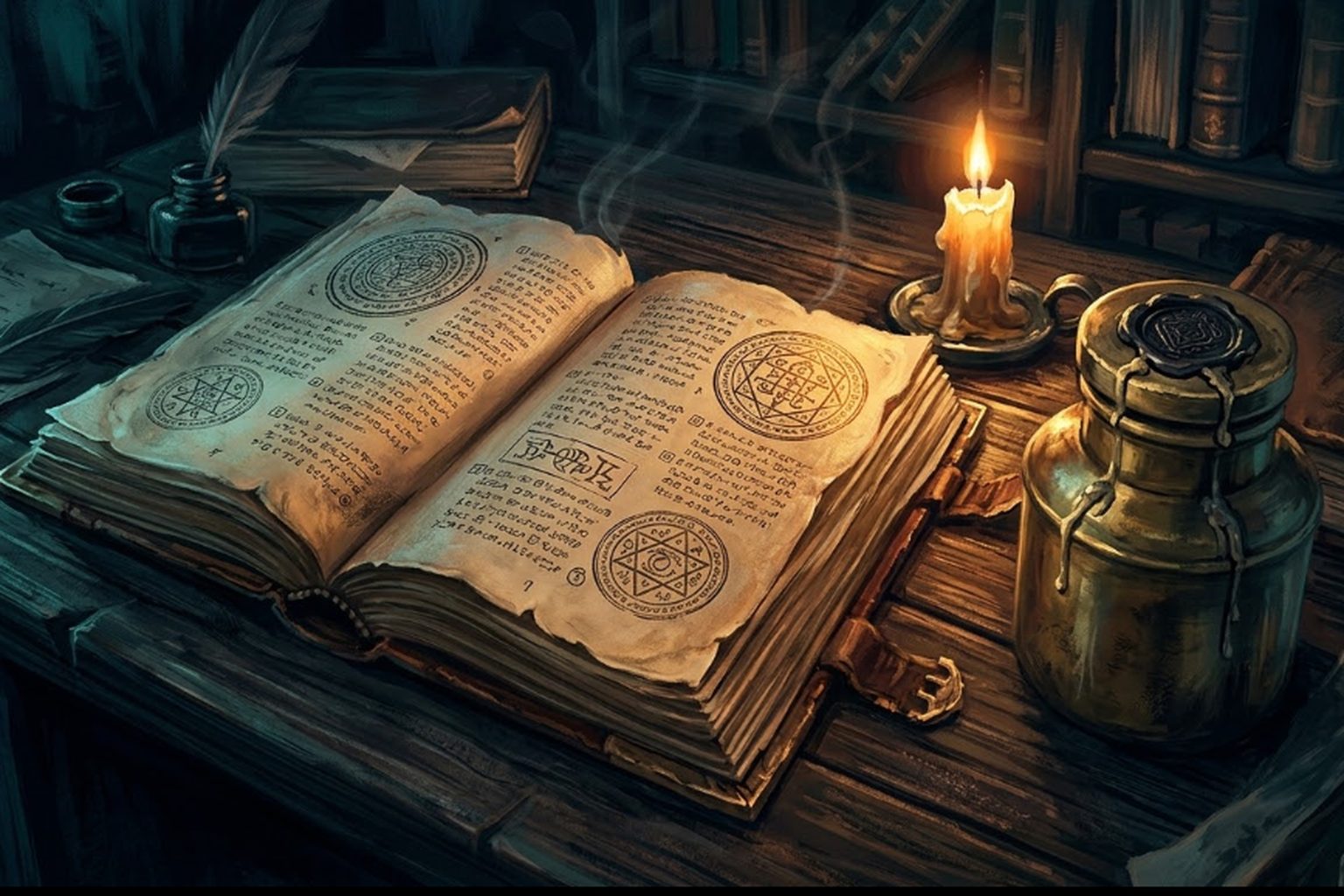
The full 72 demons of Solomon list from the Ars Goetia, in order, with each spirit's rank and legions, plus where the list came from and how to read it.
Quick answer: The 72 demons of Solomon list is the catalog of spirits in the Ars Goetia, the first book of the Lesser Key of Solomon (Lemegeton), a seventeenth-century grimoire. It runs in a fixed order from Bael, the first king, to Andromalius, the final earl, and gives each spirit a rank (king, duke, prince, marquis, earl, knight or president), a description, a seal and a number of legions. The complete list in order, with ranks and legions from the Mathers and Crowley edition, is below.
Related guides: Ars Goetia names, offices and seals, Goetia ranks and demon hierarchy, the five books of the Lesser Key, Bael and Paimon, the Goetia kings, Asmodeus in the Goetia, manuscript and printed Goetia editions.
| No. | Name | Rank | Legions |
|---|---|---|---|
| 1 | Bael | King | 66 |
| 2 | Agares | Duke | 31 |
| 3 | Vassago | Prince | 26 |
| 4 | Samigina (Gamigin) | Marquis | 30 |
| 5 | Marbas | President | 36 |
| 6 | Valefor | Duke | 10 |
| 7 | Amon | Marquis | 40 |
| 8 | Barbatos | Duke | 30 |
| 9 | Paimon | King | 200 |
| 10 | Buer | President | 50 |
| 11 | Gusion | Duke | 40 |
| 12 | Sitri | Prince | 60 |
| 13 | Beleth | King | 85 |
| 14 | Leraje | Marquis | 30 |
| 15 | Eligos | Duke | 60 |
| 16 | Zepar | Duke | 26 |
| 17 | Botis | President and Earl | 60 |
| 18 | Bathin | Duke | 30 |
| 19 | Sallos | Duke | 30 |
| 20 | Purson | King | 22 |
| 21 | Marax | Earl and President | 30 |
| 22 | Ipos | Earl and Prince | 36 |
| 23 | Aim | Duke | 26 |
| 24 | Naberius | Marquis | 19 |
| 25 | Glasya-Labolas | President and Earl | 36 |
| 26 | Bune | Duke | 30 |
| 27 | Ronove | Marquis and Earl | 19 |
| 28 | Berith | Duke | 26 |
| 29 | Astaroth | Duke | 40 |
| 30 | Forneus | Marquis | 29 |
| 31 | Foras | President | 29 |
| 32 | Asmoday (Asmodeus) | King | 72 |
| 33 | Gaap | President and Prince | 66 |
| 34 | Furfur | Earl | 26 |
| 35 | Marchosias | Marquis | 30 |
| 36 | Stolas | Prince | 26 |
Key Takeaways
The 72 demons of Solomon list is the roster of spirits found in the Ars Goetia, the opening book of the Lemegeton, better known as the Lesser Key of Solomon. The Lemegeton is a grimoire assembled in England during the mid-seventeenth century from older material, and it has five parts: Ars Goetia, Ars Theurgia-Goetia, Ars Paulina, Ars Almadel and Ars Notoria. Only the first part contains the famous seventy-two.
According to the grimoire’s own legend, King Solomon confined these spirits in a brass vessel sealed with a divine seal and cast it into a lake in Babylon, where the Babylonians later broke it open in search of treasure. The story explains why the spirits are called the demons of Solomon, but historians treat it as a framing myth. There is no evidence linking the text to the biblical king, who lived some two and a half thousand years before the book was written.
Each spirit in the list has a number, a name, a rank, a description of its appearance and powers, a seal (often called a sigil), and the number of legions it is said to command. The order is fixed and begins with Bael and ends with Andromalius. The tables in this article reproduce that order, with rank and legions as printed in the 1904 edition prepared by S. L. MacGregor Mathers and Aleister Crowley, the version most English readers know.
The direct ancestor of the Goetia list is the Pseudomonarchia Daemonum, an appendix that the Dutch physician Johann Weyer attached to the 1577 edition of his book De praestigiis daemonum. Weyer, a critic of witch trials, published the catalog of sixty-nine spirits partly to expose what he saw as the foolishness of conjuring. He deliberately omitted the seals and some of the operative details. Reginald Scot translated Weyer’s catalog into English in The Discoverie of Witchcraft (1584), which is how the names circulated in England.
Sometime in the seventeenth century, an unknown compiler reorganized the material, added the seals, dropped Weyer’s spirit Pruflas, and inserted four spirits not in Weyer: Vassago, Seere, Dantalion and Andromalius. That brought the count to seventy-two, a number with deep resonance in Solomonic lore, since the Testament of Solomon also assembles a crowd of demons and Jewish tradition speaks of the seventy-two-letter name of God. Several manuscripts of this compilation survive in the British Library, including Sloane 2731 and Sloane 3825.
The printed history begins in 1904, when Mathers’ translation, edited and introduced by Crowley, appeared as The Book of the Goetia of Solomon the King. Joseph H. Peterson’s 2001 edition went back to the manuscripts and corrected many errors. The differences between manuscript and printed Goetia explain why two lists of the same seventy-two can disagree on spellings and numbers.
Does this touch your own situation? Many readers come to these pages because something in their home, dreams or family feels unexplained. Reading history helps, but it cannot look at your specific case.
Consult the Sheikh Private, confidential, and free to ask.
The Goetia borrows its titles from the feudal courts of Europe. The ranks are not a strict chain of command, and the text assigns some spirits two titles at once, but they do carry meaning within the grimoire’s system. Later writers connected each rank to a planet and to a metal for the seal, following the order given in the Goetia’s instructions.
Nine spirits hold the title of king: Bael, Paimon, Beleth, Purson, Asmoday, Vine, Balam, Zagan and Belial. The grimoire associates kings with the Sun and with gold. Paimon, with 200 legions, commands the largest force in the entire list.
Dukes are the most numerous rank, with more than twenty entries, from Agares to Dantalion. The text links them to Venus and copper.
Princes such as Vassago, Sitri and Stolas are tied to Jupiter and tin. Presidents, including Marbas, Buer and Foras, are tied to Mercury and quicksilver, which is why many presidents are described as teachers of sciences and arts.
Marquises (Amon, Naberius, Decarabia and others) belong to the Moon and silver. Earls, also called counts, belong to Mars and copper or silver. Furcas is the only knight in the list, placed under Saturn and lead. For a fuller treatment, see the Goetia ranks and demon hierarchy.
| No. | Name | Rank | Legions |
|---|---|---|---|
| 37 | Phenex | Marquis | 20 |
| 38 | Halphas | Earl | 26 |
| 39 | Malphas | President | 40 |
| 40 | Raum | Earl | 30 |
| 41 | Focalor | Duke | 30 |
| 42 | Vepar | Duke | 29 |
| 43 | Sabnock | Marquis | 50 |
| 44 | Shax | Marquis | 30 |
| 45 | Vine | King and Earl | 36 |
| 46 | Bifrons | Earl | 6 |
| 47 | Vual (Uvall) | Duke | 37 |
| 48 | Haagenti | President | 33 |
| 49 | Crocell | Duke | 48 |
| 50 | Furcas | Knight | 20 |
| 51 | Balam | King | 40 |
| 52 | Alloces | Duke | 36 |
| 53 | Caim (Camio) | President | 30 |
| 54 | Murmur | Duke and Earl | 30 |
| 55 | Orobas | Prince | 20 |
| 56 | Gremory | Duke | 26 |
| 57 | Ose | President | 30 |
| 58 | Amy | President | 36 |
| 59 | Orias | Marquis | 30 |
| 60 | Vapula | Duke | 36 |
| 61 | Zagan | King and President | 33 |
| 62 | Valac (Volac) | President | 38 |
| 63 | Andras | Marquis | 30 |
| 64 | Flauros (Haures) | Duke | 36 |
| 65 | Andrealphus | Marquis | 30 |
| 66 | Kimaris (Cimejes) | Marquis | 20 |
| 67 | Amdusias | Duke | 29 |
| 68 | Belial | King | 50 |
| 69 | Decarabia | Marquis | 30 |
| 70 | Seere | Prince | 26 |
| 71 | Dantalion | Duke | 36 |
| 72 | Andromalius | Earl | 36 |
The two tables in this article divide the list into spirits 1 to 36 and 37 to 72. The numbers, names, ranks and legions follow the Mathers and Crowley edition. Where that edition uses an unusual spelling, the more familiar form is given in parentheses, for example Samigina (Gamigin), Asmoday (Asmodeus), Volac (Valac) and Haures (Flauros).
A few entries stand out. Bael, the first spirit, is a king said to appear with three heads, those of a cat, a toad and a man, and later demonologists connected his name with the Canaanite god Baal. Paimon is described as a crowned man riding a camel, preceded by a loud procession of trumpets and cymbals. Asmoday, the thirty-second spirit, is the Goetic form of Asmodeus, the demon of the Book of Tobit and the Testament of Solomon. Astaroth, a duke who rides an infernal dragon, descends in name from the goddess Astarte. Bael and Paimon have their own article on this site.
The legion counts should be read as part of the grimoire’s style rather than as data. Thirty is the most common figure, and a “legion” is never defined. Manuscripts disagree on several numbers: Bifrons has six legions in Mathers but sixty in some sources, Belial has fifty in Mathers but eighty elsewhere, and Valac is given thirty in Weyer and thirty-eight in Mathers. The figures below are reported as printed, not harmonized.
The idea that Solomon ruled over spirits is much older than the Goetia. The Quran describes jinn working for Solomon as builders and divers (Surah Saba 34:12 to 13) and tells of an ifrit in his court (Surah An-Naml 27:38 to 40). The Jewish Testament of Solomon, a Greek pseudepigraphal text written sometime between the first and fifth centuries CE, has Solomon interrogating a long parade of demons, including Ornias, Asmodeus and Beelzebul, and binding them with a ring from the archangel Michael.
The Goetia stands at the end of this tradition, filtered through medieval Latin magic. It shares with the Testament the motif of the ring and seal, the theme of demons compelled to confess their names and offices, and a few individual names such as Asmodeus. It does not share the Testament’s cast of characters; most Goetic names come from Weyer’s Latin sources and from garbled pagan deities.
Readers from Islamic backgrounds sometimes compare the seventy-two with the jinn, and readers interested in Southeast Asian practice compare them with the khodam, the servant spirit of Indonesian and Malay tradition. The comparisons are illuminating as cultural history, but the Goetia’s spirits are framed as demons in a Christian sense, with a Latin and Greek vocabulary that differs from both the jinn and the khodam.
The most frequent error is to assume that the seventy-two names are biblical. Apart from a handful of names with scriptural echoes (Belial, Asmodeus, Bael as Baal), the list has no basis in the Hebrew Bible or the New Testament, and none of the spirits appear in the Quran. A second error is to believe that Solomon wrote the book. The Lemegeton is pseudepigraphal: it was attributed to Solomon to give it authority, a convention common in medieval and early modern magical writing.
Third, people often treat the list as if it were one stable document. In fact, the content shifted between Weyer, Scot, the Sloane manuscripts and the printed editions. Fourth, the seals are frequently called sigils and presented as ancient. They are first attested in the seventeenth-century manuscripts and are absent from Weyer.
The Goetia has become a shared reference for popular culture. The Shin Megami Tensei and Persona games draw many of their demons straight from the list, with ranks and appearances intact. Animated series such as Helluva Boss, manga such as Magi and a wave of mobile games have introduced Stolas, Paimon, Asmodeus and Belial to audiences who have never opened a grimoire. The name Paimon reached millions of players through Genshin Impact, even though that character has nothing to do with the Goetic king beyond the name.
Alongside entertainment, there is sustained scholarly and hobbyist interest in grimoires as documents of early modern religion, and a smaller community of modern occult practitioners who treat the Goetia as a working text. Search traffic for the list therefore comes from students checking a reference, fans tracing a character’s origin, and readers who want to understand what the Ars Goetia actually says.
This article is written for the first two groups and for anyone curious about the history. It describes the list; it does not teach the ritual sections of the grimoire.
If you want to check a name or number against the sources, keep three texts in view. Weyer’s Pseudomonarchia Daemonum (1577) gives the original sixty-nine in a different order, with Latin spellings. The Sloane manuscripts, edited by Peterson, give the seventeenth-century English version with seals. The Mathers and Crowley edition (1904) is the most reprinted and the source of most online lists, including the tables here.
When two lists disagree, the disagreement usually falls into one of four kinds: spelling (Vual, Uvall, Voval), rank (Vine as king or earl), legions (Bifrons with 6 or 60) or order (Weyer places Pruflas where the Goetia has no equivalent). None of these variants makes one list right and another wrong; they record how a text changed as scribes and editors copied it. The five books of the Lemegeton are described in the article on the Lesser Key of Solomon, which gives the wider context for the Goetia.
For readers, the practical lesson is simple: cite the edition. A list labeled “72 demons of Solomon” with no source is likely a copy of a copy. A list that names Mathers, Peterson or Weyer can be checked, and that is what separates history from hearsay.
Still have a question about your own experience? Describe what you are seeing, feeling or dreaming, and when it started. The Sheikh reads every message personally and replies in private.
Have a question of your own? Lists like this one map an old tradition, but the questions that bring readers here are often personal. A Full Personal Reading with our partner PuraTarot is a reflective way to explore what is on your mind. Join the free Djinn Guide newsletter and, once you confirm, you will unlock a 50% code for your first reading.
Further reading
As an Amazon Associate we earn from qualifying purchases.
They are the spirits cataloged in the Ars Goetia, the first book of the Lesser Key of Solomon, a seventeenth-century grimoire. The list runs from Bael (a king) to Andromalius (an earl) and includes well-known names such as Paimon, Asmoday, Astaroth, Stolas, Buer and Belial. Each is given a rank, a seal and a number of legions.
No. The list comes from European grimoires, mainly Johann Weyer's 1577 catalog and the seventeenth-century Lemegeton. A few names echo scripture, such as Belial and Asmodeus (who appears in the Book of Tobit), and Bael recalls the Canaanite god Baal, but the seventy-two as a group are not biblical.
The Goetia does not rank the spirits by power. By legion count, Paimon leads with 200, followed by Beleth with 85 and Asmoday with 72. By title, the nine kings (Bael, Paimon, Beleth, Purson, Asmoday, Vine, Balam, Zagan and Belial) sit at the top of the feudal scheme the grimoire uses.
Weyer's Pseudomonarchia Daemonum (1577) listed sixty-nine spirits. The compiler of the Ars Goetia dropped Pruflas and added Vassago, Seere, Dantalion and Andromalius, reaching seventy-two. The number likely appealed because of its place in Solomonic and Kabbalistic tradition, including the seventy-two-letter name of God.
No. Jinn are beings described in the Quran and Islamic tradition, with their own vocabulary (marid, ifrit, qareen) and moral variety. The Goetic spirits are demons in a Christian and Latin framework, drawn from European sources. Both traditions tie their spirits to Solomon, which is why they are often compared, but they are distinct.
Disclaimer
This article presents the 72 demons of Solomon list as a historical and literary document for educational purposes. Beliefs about these spirits are described, not endorsed, and the site provides no ritual or conjuration instructions and makes no claims about results.
Did this guide help you understand the subject? Rate it and share your honest opinion to help other readers. Every review is checked by our editors before it appears.
There are no reviews yet. Be the first one to write one.


Sheikh Youssef
Tayeb El Merzouki
For inquiries about personalized spiritual work, private rituals, and traditional talismans, connect directly with Sheikh Youssef Tayeb El Merzouki.
Chat on WhatsApp