




Join Djinn Guide: Get 50% Off a Personal Reading
Get new guides to jinn, folklore and occult history. Confirm your subscription to unlock a 50% code for a first personal reading with our partner PuraTarot.
Discover the unseen
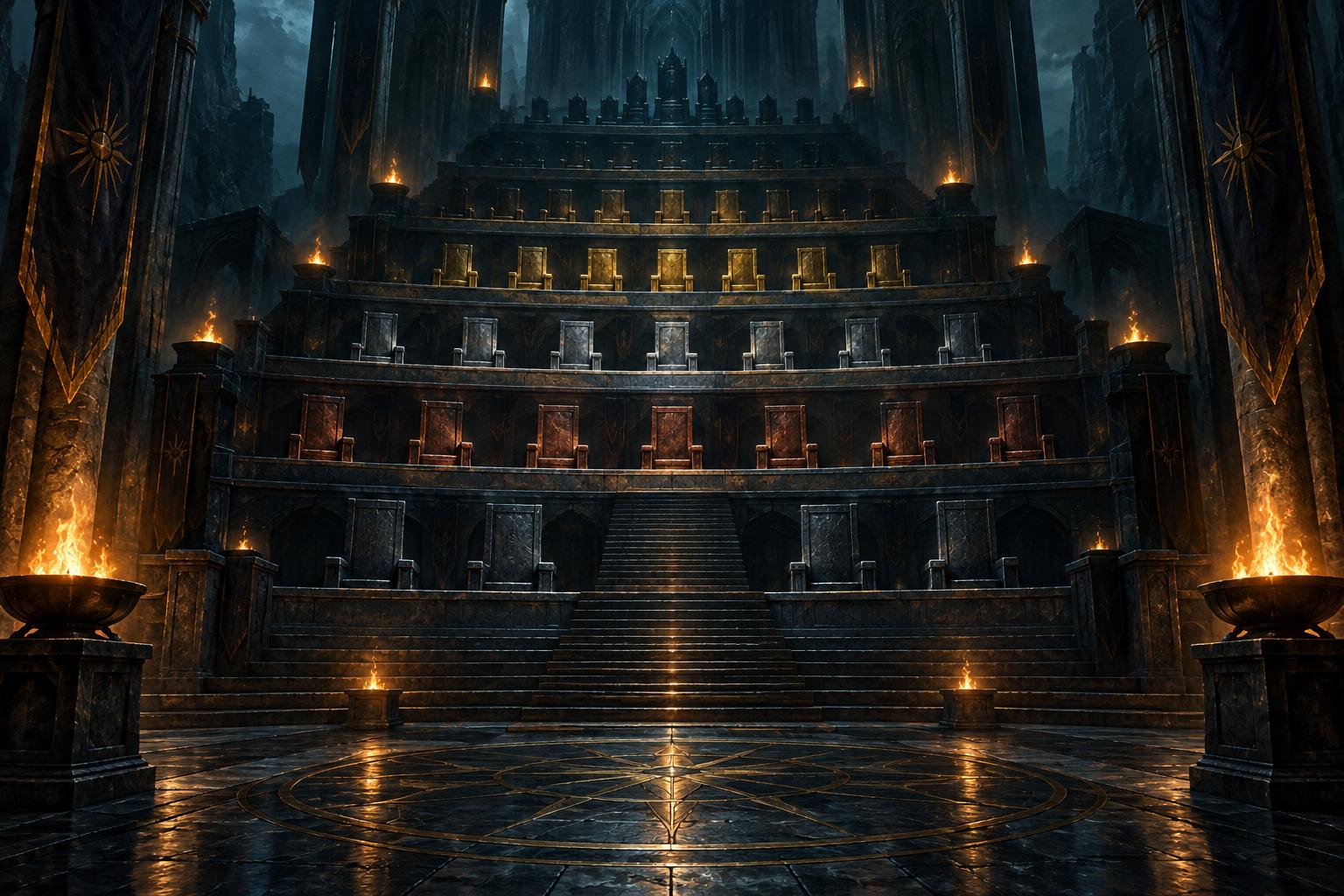
Demon hierarchy explained: the seven ranks of the Ars Goetia, from kings to the lone knight, with legions, metals, and how other grimoires rank spirits.
Quick answer: The best-known demon hierarchy comes from the Ars Goetia, the first book of the Lesser Key of Solomon, which sorts its 72 spirits into seven ranks borrowed from European nobility: king, duke, prince, marquis, earl (or count), president, and knight. Each spirit also commands a number of legions, and later editions assign a planetary metal to every rank. Other sources, from Johann Weyer's catalog to the Grand Grimoire, order spirits differently, so there is no single demon hierarchy, only several competing systems.
Related guides: Ars Goetia names, offices, and seals, the full list of 72 demons, Bael and Paimon, the Goetia kings, the five books of the Lesser Key, the seven kings of the jinn, what demonology is.
| Rank | Spirits holding it | Metal (Mathers edition) | Examples |
|---|---|---|---|
| King | 9 | Gold | Bael, Paimon, Beleth, Purson, Asmoday, Vine, Balam, Zagan, Belial |
| Duke | 23 | Copper | Agares, Astaroth, Bune, Berith, Dantalion |
| Prince | 7 | Tin | Vassago, Sitri, Gaap, Stolas, Orobas, Seere |
| Marquis | 15 | Silver | Amon, Naberius, Marchosias, Phenex, Andras |
| Earl or Count | 12 | Copper and silver mixed | Furfur, Halphas, Raum, Bifrons, Andromalius |
| President | About 15 | Mercury | Marbas, Buer, Foras, Malphas, Caim, Valac |
| Knight | 1 | Lead | Furcas |
Key Takeaways
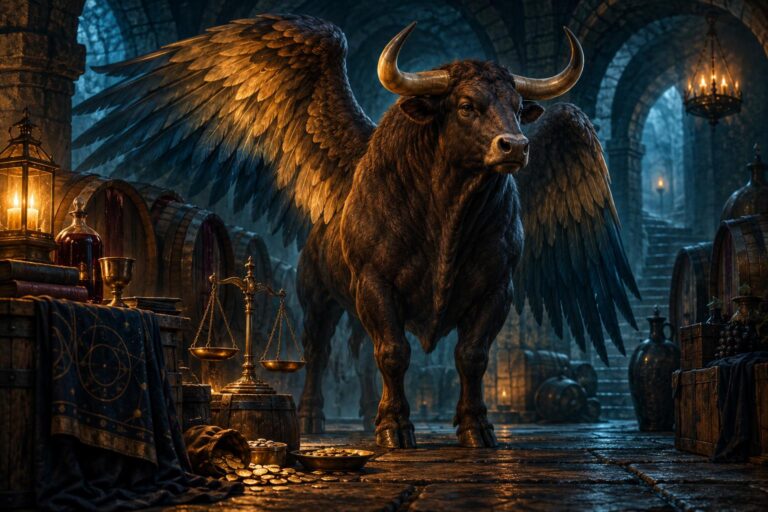
When people speak of a demon hierarchy, they usually mean the ranking system of the Ars Goetia, the first of the five books of the Lemegeton or Lesser Key of Solomon, a grimoire compiled in English manuscripts during the seventeenth century. The Goetia catalogs 72 spirits, gives each a seal, a description, and a set of offices, and assigns each a title drawn from the vocabulary of European nobility. The result reads like a court, with kings at the top and a single knight at the bottom.
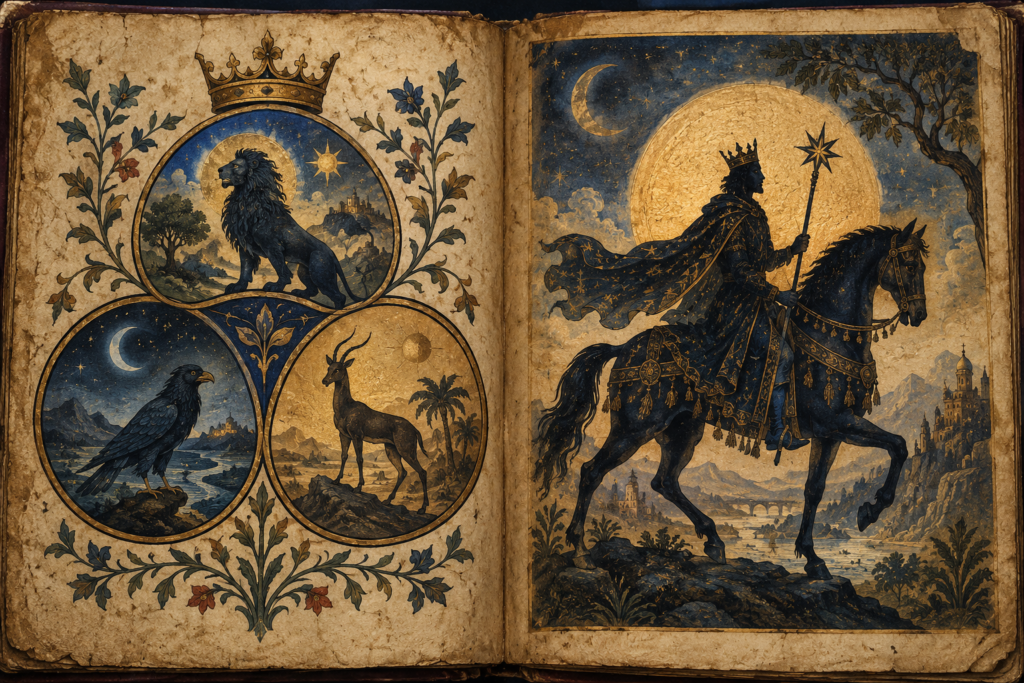
The seven ranks are king, duke, prince, marquis, earl (count in some manuscripts), president, and knight. These are not theological categories. Nothing in the Bible or in medieval church teaching uses them for demons. They are the language of a feudal society applied to spirits, and that is the first thing to understand about the system: it describes power the way a seventeenth-century reader understood power, through titles, retinues, and precedence.
Each spirit also rules a number of legions, a Roman military unit that the text uses loosely. Legion counts run from 26 for Vassago to 200 for Paimon, and the number works as a second measure of standing alongside the title. For the names, offices, and seals of all 72, see our guide to the Ars Goetia; this article concentrates on how the ranks are structured and where they came from.
The Goetia never explains its own hierarchy in one place, but the pattern emerges clearly once the entries are read together. Below is each rank with what the text consistently says about it and a few representative names. Numbers are approximate because several spirits carry two titles, and manuscripts occasionally disagree about which.
Nine spirits are called king: Bael, Paimon, Beleth, Purson, Asmoday, Vine, Balam, Zagan, and Belial. Kings sit at the top, often with the largest legion counts, and the text treats them with special ceremony. Paimon, for example, is said to arrive with a host of musicians, and Bael opens the list. Our article on Bael and Paimon looks at the two most famous kings in detail.
Dukes are the largest group, 23 in all, including Agares, Astaroth, Bune, Berith, Gremory, and Dantalion. Their offices lean toward teaching, persuasion, and the discovery of hidden things. The duke rank in a feudal court was the highest below the monarch, and the Goetia keeps that sense of a powerful second tier.
Seven spirits are princes: Vassago, Sitri, Ipos, Gaap, Stolas, Orobas, and Seere. Several also hold a second title. Princes are often described as courteous or as teachers of sciences. Stolas, who appears as an owl and teaches astronomy and the virtues of herbs and stones, is the best known today, largely because of his striking image.
Fifteen marquises, among them Amon, Naberius, Marchosias, Phenex, and Andras, and twelve earls or counts, such as Furfur, Halphas, Raum, and Andromalius, fill the middle of the hierarchy. Their offices are mixed, with marquises often shown as animals or hybrids and earls frequently linked to building, warfare, or the recovery of stolen goods.
Presidents, about fifteen including Marbas, Buer, Foras, Malphas, and Valac, are the scholars of the list, usually said to teach philosophy, medicine, or the liberal arts. The knight is a rank of one: Furcas, who appears as a cruel old man on a pale horse and teaches philosophy, rhetoric, and the divinatory arts.
Does this touch your own situation? Many readers come to these pages because something in their home, dreams or family feels unexplained. Reading history helps, but it cannot look at your specific case.
Consult the Sheikh Private, confidential, and free to ask.
Rank in the Goetia carries three practical markers. The first is the legion count, which gives every spirit a retinue and lets the reader compare them. Bael commands 66 legions, Paimon 200, Belial 80, while a modest president such as Buer has 50. The text does not say how large a legion is, and the numbers are best read as a status signal rather than a census.
The second marker is metal. A note preserved in the Sloane manuscripts and printed in the Mathers and Crowley edition of 1904 states that the seals of kings are to be made in gold, of dukes in copper, of princes in tin, of marquises in silver, of presidents in mercury, of earls in copper and silver mixed, and of knights in lead. These follow the old planetary assignments: gold for the Sun, silver for the Moon, copper for Venus, tin for Jupiter, lead for Saturn, and quicksilver for Mercury.
The third marker is time. The same manuscript tradition gives each rank preferred hours of the day or night when it was thought easier to approach, with kings and princes assigned daylight hours and marquises assigned the evening and night. We describe these details historically; they are part of what the grimoire says, and this site does not offer instructions for any of the practices the text describes.
| Source | Date | Structure |
|---|---|---|
| Pseudomonarchia Daemonum (Weyer) | 1577 | 69 spirits with the same noble titles and legion counts; no seals |
| Binsfeld's classification | 1589 | Seven princes matched to the seven deadly sins |
| Michaelis, Admirable History | 1612 | Three orders of fallen angels mirroring the angelic choirs, each opposed by a saint |
| Ars Goetia (Lemegeton) | 17th century | 72 spirits in seven ranks with seals and legions |
| Book of Abramelin | 15th-17th century mss | Four principal spirits and eight sub-princes over many servants |
| Grand Grimoire | 18th century | Emperor, prince, grand duke, prime minister, and ministers |
| Dictionnaire Infernal (de Plancy) | 1818, illustrated 1863 | Alphabetical compendium combining all earlier systems |
The ranked list did not begin with the Lemegeton. Its direct ancestor is the Pseudomonarchia Daemonum, a catalog of 69 spirits that the Dutch physician Johann Weyer attached to the 1577 edition of his book De praestigiis daemonum. Weyer already uses the titles king, duke, prince, marquis, count, president, and knight, and his legion counts largely match the later Goetia. He said he drew on an earlier manuscript, now lost, which he called the Liber officiorum spirituum, the book of the offices of spirits.
Reginald Scot translated Weyer’s list into English in The Discoverie of Witchcraft (1584), making the ranks available to English readers decades before the Lemegeton was compiled. The Goetia then added seals for each spirit, rearranged the order, and brought the count to 72, a number with its own symbolic weight in Solomonic lore. Four spirits, including Vassago and Seere, appear in the Goetia but not in Weyer.
Behind Weyer stand medieval lists of spirit offices that circulated in Latin from at least the fifteenth century, and behind those stand far older ideas of demons organized under rulers, visible in the Testament of Solomon and in Jewish and Arabic lore of spirit kings. The feudal titles are a late layer.
The Goetia is one hierarchy among many, and readers who assume a single ranked list exists are often surprised by how much the systems disagree. Peter Binsfeld, a German bishop writing in 1589, matched seven demons to the seven deadly sins: Lucifer to pride, Mammon to greed, Asmodeus to lust, Leviathan to envy, Beelzebub to gluttony, Satan to wrath, and Belphegor to sloth. His scheme has no kings or dukes at all.
The French Grand Grimoire, printed in the eighteenth century, describes a compact infernal government: Lucifer as emperor, Beelzebub as prince, and Astaroth as grand duke, served by a prime minister named Lucifuge Rofocale and five further ministers. The Book of Abramelin, a German text known from the fifteenth century onward, lists four principal spirits, Lucifer, Leviathan, Satan, and Belial, and eight sub-princes beneath them, including Astaroth, Asmodeus, Paimon, and Oriens.
Church writers built hierarchies of their own. The exorcist Sebastien Michaelis, in 1612, arranged demons in three orders mirroring the angelic choirs and paired each with the saint who opposed it. Collin de Plancy’s Dictionnaire Infernal of 1818 gathered all of these and more into an alphabetical reference, which is why modern lists so often mix Goetic dukes with sin-princes and biblical names.
The idea of spirits ruled by kings is not European in origin. Islamic and Arabic folk tradition describes seven kings of the jinn, each assigned a day of the week and a planet, with names such as Al-Mudhhib, Murrah, Al-Ahmar, Barqan, Shamhurish, Al-Abyad, and Maymun. The scheme appears in medieval Arabic magical compilations and in later Ottoman and North African manuscripts. Our article on the kings of the jinn gives the full tradition.
The parallels with the Goetia are striking. Both systems use royal titles, both tie rulers to planets or planetary metals, and both assign hours and days. Some scholars see direct transmission through Latin translations of Arabic astral magic such as the Picatrix, which reached Europe in the thirteenth century. Others see parallel development from the same older stock of Near Eastern ideas about spirit rulers, visible already in the Testament of Solomon.
Because the Goetia hierarchy looks orderly, people often read more into it than the text supports. The rank of a spirit does not indicate how dangerous it is thought to be, nor does it describe a chain of command; the Goetia never says that dukes report to kings. Titles describe standing and the kind of office a spirit holds, and some scholars suspect the authors simply enjoyed the pageantry of a full court.
Dual titles cause further confusion. Zagan is both king and president, Gaap is prince and president, Vine is king and earl, and Ipos is earl and prince, so counts by rank never total exactly 72. Lists online that give neat numbers are usually simplifying. Likewise, the metals and hours are a manuscript tradition recorded by Mathers; they are not found in every copy and should not be presented as the universal rule.
Start by identifying which system a list uses. If it has kings, dukes, and marquises, it is Goetic and should match the 72 entries of the Lemegeton. If it pairs demons with sins, it is Binsfeld. If it has an emperor and a prime minister, it is the Grand Grimoire. Mixed lists are common in games, television, and fan wikis, and knowing the sources lets you see where a modern author has combined or invented.
Then check the edition. The Mathers and Crowley Goetia of 1904 added the metals, the planetary notes, and some illustrations; Joseph Peterson’s 2001 edition of the Lemegeton returns to the manuscripts and marks the differences. Weyer’s Pseudomonarchia is available in translation and shows what the list looked like before the seals were added.
Treat the rankings as literature and cultural history. They tell us how early modern writers imagined authority, how they fused Jewish, Arabic, and classical material, and why the names still travel into fiction today. They do not constitute instructions, and this site does not provide any. For the full ordered catalog, see the list of the 72 demons of Solomon.
Still have a question about your own experience? Describe what you are seeing, feeling or dreaming, and when it started. The Sheikh reads every message personally and replies in private.
Drawn to these stories for a reason? Lists of kings, dukes and knights fascinate readers partly because they mirror the questions of rank, power and belonging we all face in our own lives. If that is on your mind, our partner PuraTarot offers a Full Personal Reading for personal reflection on where you stand and what comes next. Join the free Djinn Guide newsletter and, once you confirm, you will unlock a 50% code for your first reading.
Further reading
As an Amazon Associate we earn from qualifying purchases.
The Ars Goetia sorts its 72 spirits into seven ranks: king, duke, prince, marquis, earl or count, president, and knight. Each spirit also commands a stated number of legions. The titles are borrowed from European nobility and describe standing and office, not a chain of command, and several spirits hold two titles at once.
Nine spirits are titled king in the Ars Goetia: Bael, Paimon, Beleth, Purson, Asmoday, Vine, Balam, Zagan, and Belial. Vine is also an earl and Zagan also a president. Paimon has the largest retinue in the book at 200 legions, and Bael is listed first among all 72 spirits.
Furcas is the single spirit given the rank of knight. The text describes him as a cruel old man with a long beard riding a pale horse and holding a sharp weapon, who teaches philosophy, rhetoric, logic, astronomy, and forms of divination. He is said to command 20 legions, one of the smaller retinues.
A manuscript note printed in the Mathers and Crowley edition assigns a metal to each rank: gold for kings, copper for dukes, tin for princes, silver for marquises, mercury for presidents, mixed copper and silver for earls, and lead for knights. These follow traditional planetary correspondences and were meant for making the spirits' seals.
No. The Goetia's ranks are the most famous, but Weyer's catalog, Binsfeld's sin-princes, Michaelis's angelic orders, the Grand Grimoire's infernal court, and the Abramelin sub-princes all differ. These are literary and historical systems from different centuries, and no religious authority recognizes any of them as an official structure.
Disclaimer
This article presents grimoire literature and early modern demonology as cultural and historical material. The beliefs and rankings described are reported, not endorsed, and nothing here provides or encourages ritual practice or promises any result.
Did this guide help you understand the subject? Rate it and share your honest opinion to help other readers. Every review is checked by our editors before it appears.
There are no reviews yet. Be the first one to write one.


Sheikh Youssef
Tayeb El Merzouki
For inquiries about personalized spiritual work, private rituals, and traditional talismans, connect directly with Sheikh Youssef Tayeb El Merzouki.
Chat on WhatsApp