





Join Djinn Guide: Get 50% Off a Personal Reading
Get new guides to jinn, folklore and occult history. Confirm your subscription to unlock a 50% code for a first personal reading with our partner PuraTarot.
Discover the unseen
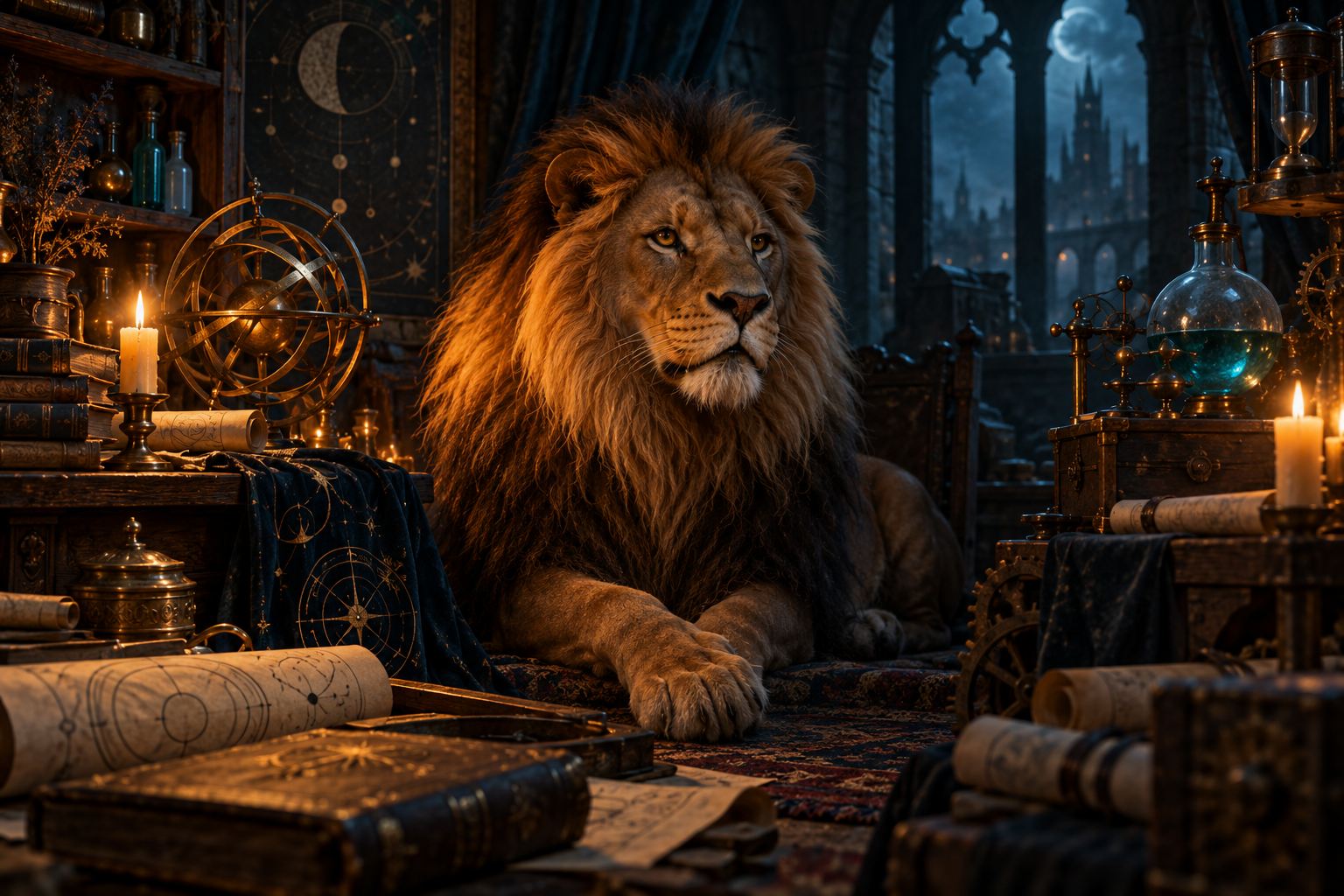
Marbas demon profile: the fifth spirit of the Ars Goetia, a president who appears as a lion. Rank, legions, sigil, offices, sources and modern mentions.
Quick answer: The Marbas demon is the fifth spirit of the Ars Goetia, a great president who first appears as a lion and then takes human form at the request of the operator. The Lemegeton says he answers truly about hidden or secret things, causes and cures diseases, teaches mechanical arts, and can change people into other shapes. He commands thirty-six legions. Johann Weyer's 1577 catalog lists him as Marbas, also called Barbas.
Related guides: the full list of 72 Goetia demons, Goetia ranks and what a president is, names, offices and seals in the Ars Goetia, Buer, the healing president, Valac, the child-like president, Zagan, the winged bull king.
| Spirit | Number & rank | Appearance | Main offices | Legions |
|---|---|---|---|---|
| Marbas | 5, President | A great lion, then a man | Hidden things, diseases, mechanical arts, shape-changing | 36 |
| Buer | 10, President | Described in Mathers as appearing in Sagittarius; later art shows a wheel of legs | Philosophy, herbs, healing, good familiars | 50 |
| Valac | 62, President | A child with angel wings on a two-headed dragon | Hidden treasure, finding serpents | 30 (Weyer) or 38 (Mathers) |
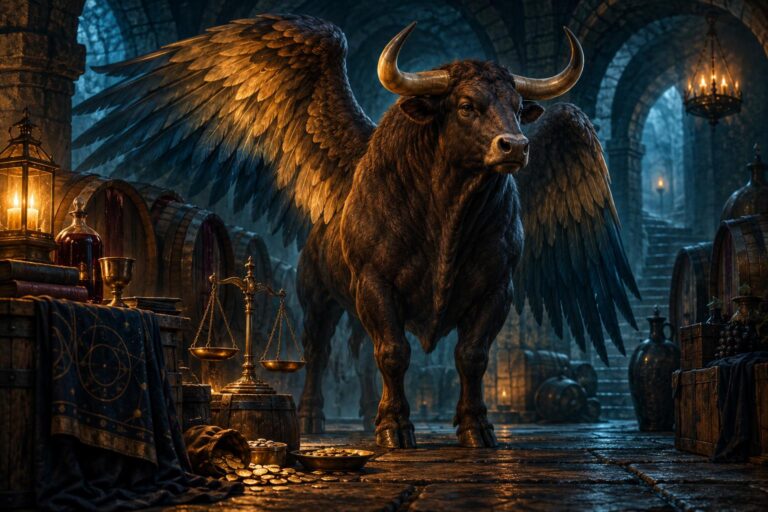
| Zagan | 61, King and President | A bull with griffin wings, then a man | Wit, transmutation of liquids and metals | 33 |
Key Takeaways
Marbas is the fifth of the seventy-two spirits cataloged in the Ars Goetia, the first book of the Lesser Key of Solomon. In the edition prepared by S. L. MacGregor Mathers and published by Aleister Crowley in 1904, the entry reads that Marbas is “a Great President” who “appeareth at first in the form of a Great Lion, but after, at the request of the Master, he putteth on Human Shape.” The text then lists his offices: he gives true answers about hidden or secret things, causes diseases and cures them, imparts wisdom and knowledge of mechanical arts, and can change people into other shapes.
His rank of president places him in a tier the grimoire associates with the planet Mercury and with knowledge, teaching and craft. Presidents are not kings or dukes; they are closer to learned administrators. Thirty-six legions are placed under his command, a modest number compared with the seventy-two legions of a king like Bael, but typical for a president. For how these ranks fit together, see our guide to demon hierarchy and Goetia ranks.
Marbas has no elaborate legend attached to him. Unlike Asmodeus or Belial, he does not appear in scripture or in older demonologies. He belongs entirely to the grimoire tradition, where he is one of a cluster of spirits concerned with medicine, mechanics and secrets. That makes him a useful case study: a demon whose whole biography is a paragraph in a sixteenth-century catalog.
The earliest printed source for Marbas is Johann Weyer’s Pseudomonarchia Daemonum, an appendix to the 1577 edition of his De Praestigiis Daemonum. Weyer, a physician and critic of the witch trials, published the list to expose what he saw as the foolishness of ritual magic. His entry calls the spirit Marbas, alias Barbas, a great president who comes in the shape of a mighty lion, answers fully about hidden things, brings sicknesses and cures them, and gives skill in handicrafts. Weyer also gives him thirty-six legions.
Reginald Scot translated Weyer’s catalog into English in The Discoverie of Witchcraft (1584), which is how the name reached English readers. In Scot’s version Marbas is the fifth spirit as well, which shows that the ordering in the later Goetia was already stable by the late sixteenth century. Scot preserves the alias Barbas and the detail that the spirit changes people into other shapes.
The Ars Goetia, compiled in the mid-seventeenth century, follows Weyer’s text closely for Marbas, adds a sigil, and adjusts a few phrases. The main difference is framing: Weyer offered the list as a warning, while the Lemegeton presents it as a working manual. The description of the spirit itself barely changes across the two sources, which is more than can be said for several other demons whose ranks and legions drift between editions.
Does this touch your own situation? Many readers come to these pages because something in their home, dreams or family feels unexplained. Reading history helps, but it cannot look at your specific case.
Consult the Sheikh Private, confidential, and free to ask.
Each spirit in the Ars Goetia has a seal, and the grimoire says the operator must wear it as a lamen. The Marbas sigil in the Mathers edition is a symmetrical figure built around a central vertical stem. From the top of the stem two arms sweep outward and curl back toward the center like horns or hooks, and small circles cap the ends of several lines. Below, a wider horizontal element with short descending strokes anchors the design, giving the whole figure a vaguely architectural or mechanical look that modern commentators have connected to his office over mechanical arts.
The seals are not pictures of the spirits. They are abstract glyphs whose origin is uncertain; some scholars trace the style to earlier Solomonic manuscripts and to the cipher-like characters in the Key of Solomon. The Ars Goetia itself says only that the sigil is the spirit’s “Seal” or “Character” and that each spirit must obey it. For background on how these glyphs work and where the idea came from, see our guide to what a sigil is.
Modern reproductions vary. Joseph Peterson’s critical edition of the Lemegeton, based on British Library manuscripts, shows slight differences from Mathers in line weight and in the placement of the small circles. None of the variants is more authentic than another in any practical sense; they are copies of copies. This site describes seals for historical and artistic interest and does not provide instructions for using them.
The Goetia assigns Marbas four distinct functions. Tradition holds that each reflects an area of early modern concern.
Marbas is said to give true answers about things hidden or secret. In the world of the grimoires this covered everything from lost objects to the intentions of rivals. Several other spirits share this office, including Vassago and Valac, which suggests it was among the most common reasons people turned to these books.
The pairing is deliberate. Early modern readers believed that a power able to remove sickness could also inflict it, and the text makes no attempt to soften this. Buer and Marbas are the two presidents most associated with medicine, which fits the Mercury connection and the learned, physician-like character of the rank.
The phrase “Mechanical Arts” meant practical crafts such as engineering, clockwork, metalworking and building. A spirit who teaches them is a product of a period fascinated by machines. Weyer’s version says “handicrafts,” which covers the same ground.
The claim that Marbas can “change Men into other Shapes” is one of the stranger offices in the catalog. It echoes folk belief in transformation and the lion form Marbas himself takes. Zagan, another president, has a similar transformative office over materials rather than people.
None of these claims is presented here as fact. They are what the books say, and they tell us what their compilers hoped for and feared.
Jacques Collin de Plancy’s Dictionnaire Infernal, first published in 1818 and famous for the 1863 edition illustrated by Louis Le Breton, includes a short entry for Marbas (also spelled Marbas or Barbas) that repeats the Weyer profile: a president appearing as a lion, knowledgeable about secrets, sickness and crafts. Marbas is not one of the spirits Le Breton drew. His sixty-nine engravings gave lasting faces to Bael, Buer, Astaroth, Stolas and many others, and the demons he skipped have remained visually open.
That gap explains why the lion demon of the Goetia looks different in every modern depiction. Some artists give him a full lion’s body, some a lion-headed man in a scholar’s robe, some a lion crowned to mark his presidency. The tradition supports any of these, since the text only says he appears as a lion and later as a man.
In the nineteenth and twentieth centuries occult writers folded Marbas into systems of correspondences. The Golden Dawn assigned the seventy-two spirits to decans of the zodiac; Crowley’s 1904 edition gives Marbas a day demon attribution. These additions say more about the period that made them than about the spirit as Weyer knew him. For how such tables were built, see our overview of what demonology is.
Presidents form a distinct group within the seventy-two. The Goetia lists Marbas, Buer, Botis, Marax, Glasya-Labolas, Foras, Gaap, Malphas, Haagenti, Caim, Ose, Amy, Valac, Zagan and Camio with presidential rank, several of them holding a second title. What they share is a focus on knowledge: philosophy, herbs, languages, sciences, hidden things.
Marbas stands out for the medical office he shares with Buer and for the shape-changing claim he shares with nobody else in quite that form. His lion appearance groups him with other beast-form spirits such as Valefor, who appears as a lion with an ass’s head, and Marchosias, a wolf with griffin’s wings. The comparison table above sets him beside Buer, Valac and Zagan, the presidents readers most often look up alongside him.
One practical reading of these clusters is that the grimoire compilers were building a kind of directory, assigning each need to a specialist. Marbas was the entry you turned to for mechanical skill and for the body’s ailments. Whether anyone believed the spirit existed, the catalog functioned as a map of what early modern Europeans wanted and feared.
Marbas is a minor name compared with Asmodeus or Belial, but he surfaces regularly in media that mine the Goetia for characters. He appears as a summonable entity in several Japanese role-playing and mobile games that draw their rosters from the seventy-two spirits, usually depicted as a lion or lion-headed warrior. He has featured in webcomics and light novels built around the Goetia, and the name turns up in metal and electronic music as a band or track title.
Online, Marbas is discussed in occult forums alongside Buer as a “healing demon,” an interpretation that reads the curing office and ignores the disease-causing one. The grimoire supports neither hope nor fear; it simply lists both. Readers encountering claims about Marbas in modern spiritual marketing should remember that every detail traces back to a few sentences in Weyer and the Lemegeton.
The appeal of the lion is easy to see. It is an ancient symbol of royalty and strength, and a demon who wears that form and then speaks as a man makes a vivid image for artists. That image is a modern invention layered on a sparse text, and it is worth enjoying it as such.
Because Marbas has no scriptural or mythological backstory, his profile is a clean test of how the Goetia tradition transmits information. Three sources matter: Weyer (1577), Scot’s English translation (1584), and the Ars Goetia in its manuscript and printed forms, especially Mathers and Crowley (1904) and Peterson’s critical edition (2001). Everything else, from de Plancy to modern blogs, derives from these.
When comparing them, watch for small changes. Weyer says handicrafts; the Goetia says mechanical arts. Weyer gives the alias Barbas; later editions sometimes drop it. The legion count stays at thirty-six throughout, which is unusual, since many spirits gain or lose legions between editions. If a source gives Marbas a different number, a different rank, or a long narrative about his origins, it is adding to the tradition rather than reporting it.
This site presents the Goetia as a historical document and does not offer or endorse ritual instructions. For the wider list and where Marbas sits in it, see the 72 demons of Solomon, and for the structure of the whole catalog, the guide to Goetia names, offices and seals.
Still have a question about your own experience? Describe what you are seeing, feeling or dreaming, and when it started. The Sheikh reads every message personally and replies in private.
Want a personal perspective? Marbas is said to answer truly about hidden things, and that old image of honest answers still speaks to many readers. A Full Personal Reading from our partner PuraTarot offers a personal, reflective look at your own questions. Join the free Djinn Guide newsletter and, once you confirm, you will unlock a 50% code for your first reading.
Further reading
As an Amazon Associate we earn from qualifying purchases.
Marbas is the fifth spirit of the Ars Goetia, a president who appears as a great lion and then as a man. The Lemegeton says he reveals secrets, causes and cures diseases, teaches mechanical arts and can change people's shapes, ruling thirty-six legions. The profile comes from Johann Weyer's 1577 catalog, where he is also called Barbas.
The Goetia says Marbas first appears as a great lion and then, at the operator's request, takes human shape. No further description is given. The Dictionnaire Infernal has no engraving of him, so later images of a lion-headed figure or crowned lion are artists' interpretations rather than traditional depictions.
Marbas holds the rank of president, which the grimoire tradition associates with knowledge and with the planet Mercury. He is said to govern thirty-six legions of spirits. This number is the same in Weyer's Pseudomonarchia Daemonum, Reginald Scot's translation and the Mathers edition of the Goetia.
Yes. Weyer lists the spirit as Marbas, alias Barbas, and the two names refer to the same entry. The Barbas spelling appears in some later demonologies and in the Dictionnaire Infernal, while the Ars Goetia and most modern sources use Marbas.
The Goetia says Marbas both causes and cures diseases, so calling him a healing demon tells only half the story. Early modern readers assumed a power over sickness worked in both directions. This site describes the belief as it appears in the sources and makes no claims about any spirit's real effects.
Disclaimer
This article describes Marbas as he appears in historical grimoires and demonologies for educational and cultural interest. The beliefs summarized are not endorsed, no ritual instructions are given, and no claim is made that any spirit, seal or practice produces results.
Did this guide help you understand the subject? Rate it and share your honest opinion to help other readers. Every review is checked by our editors before it appears.
There are no reviews yet. Be the first one to write one.


Sheikh Youssef
Tayeb El Merzouki
For inquiries about personalized spiritual work, private rituals, and traditional talismans, connect directly with Sheikh Youssef Tayeb El Merzouki.
Chat on WhatsApp