





Join Djinn Guide: Get 50% Off a Personal Reading
Get new guides to jinn, folklore and occult history. Confirm your subscription to unlock a 50% code for a first personal reading with our partner PuraTarot.
Discover the unseen

Vassago demon explained: the third spirit of the Ars Goetia, a prince of good nature who reveals lost and hidden things, his sigil, legions, and sources.
Quick answer: The Vassago demon is the third of the 72 spirits in the Ars Goetia, the first book of the Lesser Key of Solomon. The text ranks him as a Mighty Prince of the same nature as Agares, calls him good-natured, and says his office is to declare things past and to come and to discover anything hidden or lost. He commands 26 legions. Unusually, the Goetia gives him no physical description, and he does not appear in Johann Weyer's earlier catalogue of 1577.
Related guides: the complete list of 72 Goetia spirits, how Goetia ranks and legions work, Agares, the duke of the same nature, the 72 angels paired with the Goetia, Goetia manuscripts and printed editions, what demonology means as a field.
| Spirit | Number and rank | Legions | Appearance in the Lemegeton | Office |
|---|---|---|---|---|
| Vassago | 3, Mighty Prince | 26 | None given; described only as good-natured | Declares past and future, discovers hidden and lost things |
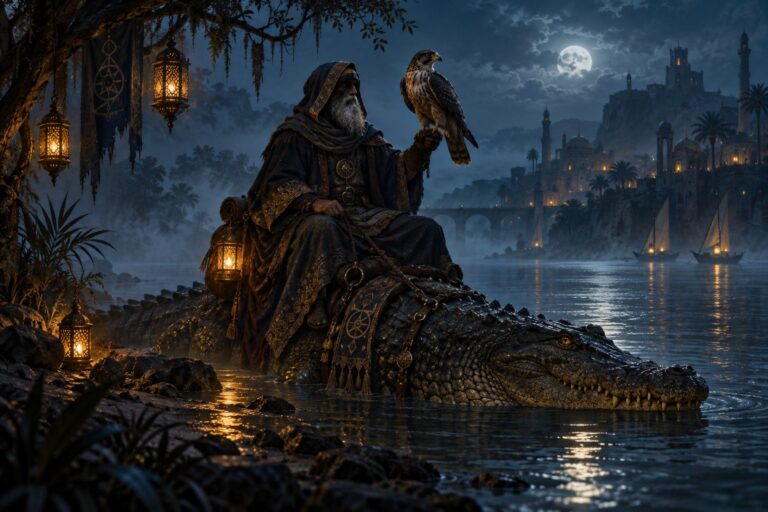
| Agares | 2, Duke | 31 | An old man riding a crocodile, carrying a goshawk | Teaches languages, brings back runaways, causes earthquakes |
| Orobas | 55, Prince | 20 | A horse, then a man when commanded | Gives true answers about past, present, and future |
| Seere | 70, Prince | 26 | A beautiful man on a winged horse | Carries things swiftly, reveals thefts and hidden treasure |
| Andromalius | 72, Earl | 36 | A man holding a great serpent | Returns stolen goods, exposes thieves and hidden treasure |
Key Takeaways
Vassago appears as the third entry in the Ars Goetia, the catalogue of 72 spirits that opens the Lesser Key of Solomon, or Lemegeton, a grimoire compiled in English during the mid-seventeenth century. The Mathers and Crowley edition of 1904 describes him in a single short paragraph: he is a Mighty Prince, of the same nature as Agares, who precedes him in the list. He is said to be of a good nature, and his office is to declare things past and to come and to discover all things hidden or lost. He governs 26 legions of spirits.
That is the whole of the primary description. Compared with entries like Bael, who has three heads, or Paimon, who arrives with a crowned procession and music, Vassago is almost featureless. The absence of a physical form is one of his distinguishing marks, and it has shaped everything written about him since. Readers meeting him for the first time in a list of names will find his number and rank in the complete list of 72 Goetia spirits.
The Goetia presents its spirits as beings bound by King Solomon and listed for the use of a magician, but the book is a historical artifact of early modern Europe, not an ancient text. This site treats Vassago and his companions as subjects of cultural and literary history and gives no instructions for invoking, binding, or working with any spirit.
Vassago’s office falls into a category the Goetia returns to again and again: knowledge of what is concealed. Several spirits reveal hidden treasure, expose thieves, or answer questions about past and future, which tells us something about the clients of early modern cunning folk and conjurers. Recovering stolen goods and finding lost objects were among the most common services people paid for, and a catalogue that promised such help had practical appeal. Vassago’s good nature, explicitly noted, places him among the spirits a manuscript might describe as safe to deal with.
His rank of prince is shared with Sitri, Ipos, Gaap, Stolas, Orobas, and Seere. In the Goetia’s feudal scheme princes are associated with the metal tin and, in later Golden Dawn tables, with the planet Jupiter. The rank does not correspond to the order of the list, as the site explains in how Goetia ranks and legions work. Twenty-six legions is a middling figure; counts in the Goetia range from 3 to 85.
Because no form is given, later writers have filled the gap in various ways. Some modern occult authors describe him as an old man, borrowing from Agares, whose nature he is said to share. Others leave him invisible or give him the shape of a shadow or a voice. None of these has textual support. The Lemegeton’s silence may simply reflect a gap in the compiler’s source, since the entries for spirits with the fullest descriptions are those with the longest history in print.
Does this touch your own situation? Many readers come to these pages because something in their home, dreams or family feels unexplained. Reading history helps, but it cannot look at your specific case.
Consult the Sheikh Private, confidential, and free to ask.
Every Goetia spirit has a seal, and Vassago’s is printed as the third seal in the Mathers and Crowley edition. It is a compact symmetrical figure: a horizontal baseline from which short vertical strokes rise, topped by a looped or bowed element, with small circles marking several line ends and a pair of outward-curving arms. Like all 72 seals it is a signature rather than a picture, meant in the grimoire’s logic to be shown to the spirit as a token of authority.
Manuscript versions differ. Sloane 2731 and Sloane 3825 in the British Library, and the Goetia of Dr Rudd preserved in Harley 6483, draw the seals with variations in proportion and in the number of terminal circles. The Rudd manuscript, edited for print by Stephen Skinner and David Rankine, also pairs each spirit with one of the 72 angels of the Shem HaMephorash as a controlling counterpart; Vassago, as the third spirit, is matched with the third angel, Sitael. That pairing is a seventeenth-century development explained in the site’s article on the 72 angels paired with the Goetia.
The standardized sigil most people encounter online derives from the 1904 edition, often redrawn with thicker lines for use on prints and jewelry. Treat such images as modern graphic design based on a Victorian edition of a seventeenth-century copy, not as an ancient symbol.
The usual way to trace a Goetia spirit backward is through Johann Weyer’s Pseudomonarchia Daemonum, the catalogue of 69 spirits published in 1577 as an appendix to De praestigiis daemonum, and through Reginald Scot’s English rendering of it in The Discoverie of Witchcraft in 1584. Vassago is not there. Along with Seere, Dantalion, and Andromalius, he is one of the four spirits that the Lemegeton compiler added to Weyer’s list to bring the total to 72, a number with its own symbolic weight, matching the 72 names of God in Kabbalistic tradition.
Where the compiler found him is unknown. The spirit may have circulated in English manuscripts of the sixteenth and early seventeenth centuries that have not survived or have not been identified, and the slenderness of his entry suggests the compiler had little to work with. His position at number three, immediately after Bael and Agares, is deliberate, because it allows the note that he is of the same nature as Agares to make sense in sequence.
The same gap runs forward. Collin de Plancy’s Dictionnaire Infernal (1818, illustrated 1863) drew its demon entries mainly from Weyer and from Catholic demonology, so Vassago receives no entry and no engraving by Louis Le Breton. The spirits readers picture most vividly, such as Amon, Buer, or Stolas, are the ones Le Breton drew. Vassago never had that advantage, which is why he remained obscure until twentieth-century occult publishing revived the complete Goetia.
The Goetia says Vassago shares the nature of Agares, so the two are best read together, and his office links him to two spirits at the far end of the list.
Agares, spirit 2, is a duke with 31 legions who appears as an old man riding a crocodile and carrying a goshawk. He teaches languages, makes those who run away come back, and is said to cause earthquakes. What he and Vassago share is probably the note of mildness; the manuscripts describe both as comparatively approachable. His entry is examined in Agares, the duke of the same nature.
Seere, spirit 70, is another prince with 26 legions and another addition absent from Weyer. He appears as a beautiful man on a winged horse, carries things across the world instantly, and reveals thefts and hidden treasure. He and Vassago are the two good-natured princes of the catalogue and share the identical legion count.
Andromalius, spirit 72, closes the list. An earl with 36 legions, he holds a great serpent and specializes in returning stolen goods, catching thieves, and finding hidden treasure. Where Vassago reveals, Andromalius punishes; the two represent the gentle and the stern faces of the same client need.
Vassago’s brevity in the sources leaves room for invention, and a few claims circulate widely without support.
Vassago’s main appearance outside occult literature is in Dean Koontz’s thriller Hideaway (1992), in which a young murderer takes the name Vassago after reading about the Goetia prince, and in the 1995 film adaptation starring Jeff Goldblum. Koontz’s plot has nothing to do with lost objects; he chose the name for its sound and its obscurity. The name also turns up on lists of demons in role-playing games and in occult-themed jewelry, usually accompanied by the 1904 sigil. Compared with Stolas or Paimon he remains a minor figure in popular culture.
People search for the Vassago demon because of the novel, because they are working through the 72 spirits one by one, or because the office of finding lost things has an obvious appeal. The historically honest answer to the last interest is that the Goetia records a belief held by some early modern practitioners, not a service that any text can deliver, and that the site does not provide instructions for calling spirits.
To read Vassago’s sources well, compare the Mathers and Crowley text with the manuscript transcriptions in Joseph Peterson’s edition of the Lemegeton and with the Rudd manuscript edited by Skinner and Rankine. Note what each version includes, and note that Weyer and de Plancy have nothing. The brevity itself is the historical fact: Vassago is a name the Lemegeton compiler needed to reach 72, given an office that clients wanted, and left without a face. The broader method for handling such texts is outlined in the site’s survey of Goetia manuscripts and printed editions.
Still have a question about your own experience? Describe what you are seeing, feeling or dreaming, and when it started. The Sheikh reads every message personally and replies in private.
Have a question of your own? Vassago’s legend is about finding what was lost, and many readers come to it with a question about a direction they feel they have misplaced. A Custom Spiritual Session with our partner PuraTarot offers a personal, reflective reading focused on that one question. Join the free Djinn Guide newsletter and, once you confirm, you will unlock a 50% code for your first reading.
Further reading
As an Amazon Associate we earn from qualifying purchases.
Vassago is the third spirit of the Ars Goetia, ranked as a Mighty Prince commanding 26 legions. The Lemegeton says he is of the same nature as Agares, good-natured, and that his office is to declare things past and future and to discover hidden or lost things. He is not found in Weyer's 1577 catalogue.
The Goetia gives Vassago no physical description, which makes him unusual among the 72 spirits. Modern illustrations that show him as an old man, a shadow, or a cloaked figure are artists' inventions. He also has no engraving in the Dictionnaire Infernal, because de Plancy did not include him.
Vassago's sigil is the third seal printed in the Mathers and Crowley edition of 1904: a symmetrical figure built on a horizontal base with rising strokes, a bowed top, outward-curving arms, and small circles at the line ends. Seventeenth-century manuscripts such as Sloane 2731 draw it with minor differences in proportion.
Weyer's 1577 list contains 69 spirits. The compiler of the Lemegeton added four more, Vassago, Seere, Dantalion, and Andromalius, to reach 72, a number matching the 72 names of God in Kabbalistic tradition. The source for these additions is unknown, and Vassago's short entry suggests little material was available.
Vassago is a prince, one of seven princes in the Goetia with Sitri, Ipos, Gaap, Stolas, Orobas, and Seere. The 1904 edition associates princes with tin and later occult tables with Jupiter. His 26 legions equal those of Seere, the other good-natured prince added to Weyer's list.
Disclaimer
This article describes the Vassago demon as he appears in historical grimoires and later literature, for educational and cultural purposes. The beliefs recorded are presented as beliefs, and no instructions for invoking, binding, or working with any spirit are given.
Did this guide help you understand the subject? Rate it and share your honest opinion to help other readers. Every review is checked by our editors before it appears.
There are no reviews yet. Be the first one to write one.


Sheikh Youssef
Tayeb El Merzouki
For inquiries about personalized spiritual work, private rituals, and traditional talismans, connect directly with Sheikh Youssef Tayeb El Merzouki.
Chat on WhatsApp