







Join Djinn Guide: Get 50% Off a Personal Reading
Get new guides to jinn, folklore and occult history. Confirm your subscription to unlock a 50% code for a first personal reading with our partner PuraTarot.
Discover the unseen
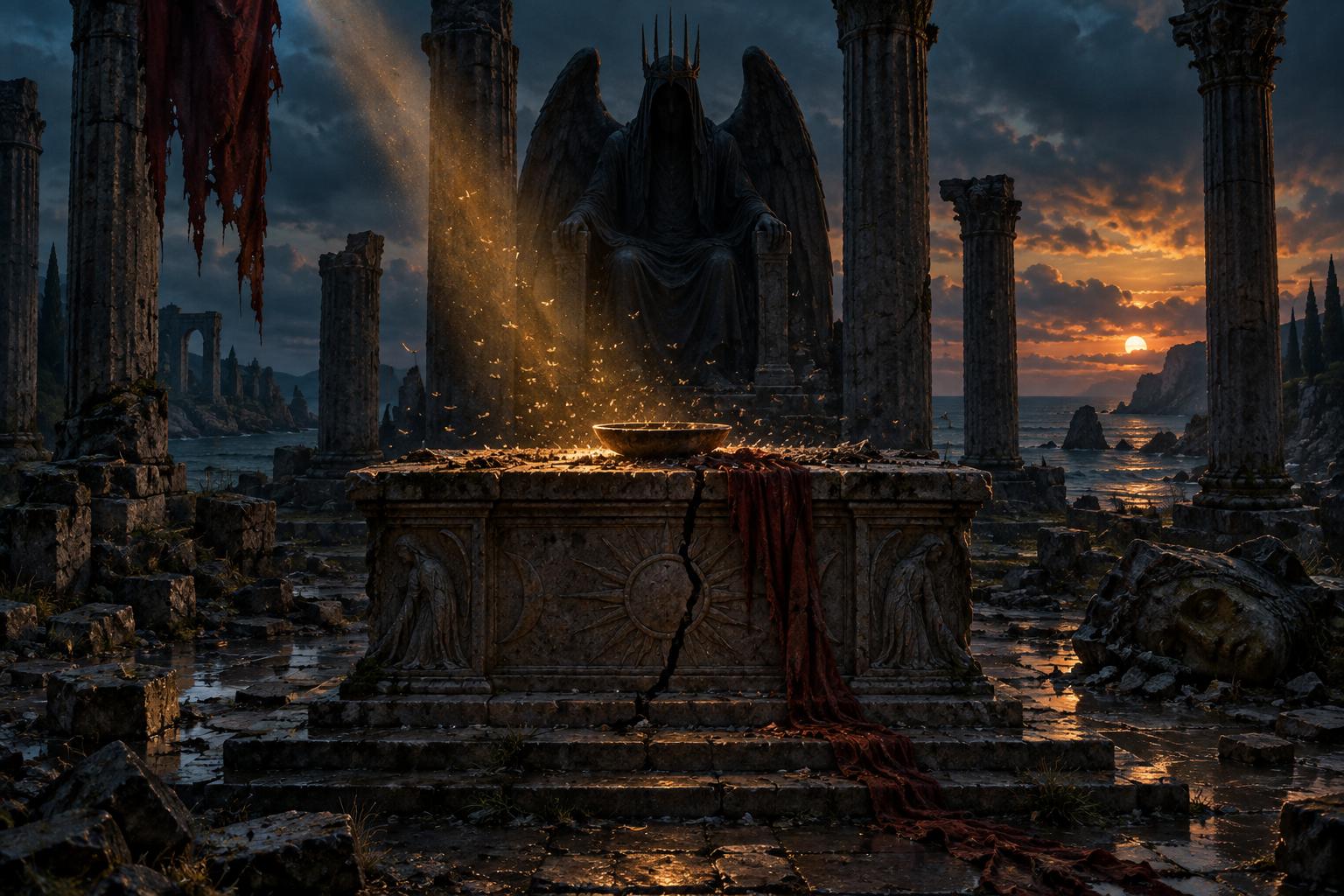
Beelzebub explained: the Philistine god of Ekron, the lord of the flies, the prince of demons in the Gospels, and how grimoires ranked him by Lucifer.
Quick answer: Beelzebub is a name from the Hebrew Bible that became one of the most famous demon names in the Western world. It comes from Baal-zebub, the god of the Philistine city of Ekron in 2 Kings 1, a name usually translated as lord of the flies. In the Gospels, Jesus is accused of casting out demons by Beelzebul, the prince of demons. Later Christian demonology and the grimoires made Beelzebub a chief devil, often ranked just below Lucifer or Satan.
Related guides: the Testament of Solomon explained, what demonology is and studies, Astaroth, from goddess to duke, Belial in scripture and the Goetia, the Book of Abramelin, demon hierarchies and Goetia ranks.
| Source | Form of the name | Role given to Beelzebub |
|---|---|---|
| 2 Kings 1:2–16 (Hebrew Bible) | Baal-zebub | God of Ekron consulted by King Ahaziah; condemned by Elijah |
| Gospels (Matthew 12, Mark 3, Luke 11) | Beelzeboul (Greek) | Prince of demons; Jesus accused of using his power |
| Testament of Solomon | Beelzeboul | Prince of demons bound by Solomon; claims to have been a high angel |
| Binsfeld's classification (1589) | Beelzebub | Demon of gluttony among the seven deadly sins |
| Milton, Paradise Lost (1667) | Beelzebub | Satan's second in command and chief counselor |
| Grand Grimoire and Abramelin | Beelzebuth / Belzebud | One of the three chief spirits; one of eight sub-princes |
| Dictionnaire Infernal (1863 edition) | Belzébuth | Illustrated as a giant fly by Louis Breton |
Key Takeaways
The name Beelzebub comes from the Hebrew Baal-zebub, which appears in 2 Kings 1 as the title of a god worshipped at Ekron, one of the five Philistine cities on the coast of what is now Israel. Baal means lord or master and was the title of several Canaanite deities. Zebub means flies, so the whole name reads as lord of the flies. That literal meaning has shaped the demon’s image for more than two thousand years.
Most scholars doubt that any city actually worshipped a fly god. The more likely explanation is that the original title was Baal-zebul, lord of the lofty dwelling or Baal the Prince, an epithet known from Ugaritic texts for the storm god Baal. Hebrew writers hostile to Philistine religion may have altered zebul to zebub as a deliberate insult, turning the exalted lord into the lord of dung flies. The Greek New Testament supports this: it writes the name Beelzeboul, preserving the older form, while the Latin Vulgate and English Bibles after it followed the Hebrew with Beelzebub.
So the beelzebub meaning depends on which layer you read. In its origin it is a divine title from a neighboring religion. In the Hebrew Bible it is a rival god rejected by the prophet Elijah. In the Gospels it is a name for the chief of the demons. Each later stage inherited the name and added a new role.
The only Hebrew Bible appearance is 2 Kings 1:2–16. King Ahaziah of Israel falls through a lattice in his upper room and sends messengers to ask Baal-zebub, the god of Ekron, whether he will recover. The prophet Elijah intercepts them and asks whether there is no God in Israel that the king must inquire of the god of Ekron. Ahaziah dies, as Elijah announces. The passage is about loyalty to Israel’s God, not about demons, but it fixed the name in scripture as a foreign power opposed to the prophets.
Six centuries later the name reappears in the Gospels. In Matthew 12:24, Mark 3:22 and Luke 11:15, religious opponents say that Jesus casts out demons by Beelzebul, the ruler of the demons. Jesus answers that a kingdom divided against itself cannot stand, and that if Satan casts out Satan his kingdom is finished. The reply treats Beelzebul and Satan as effectively the same ruler, which is the first clear link between the old Philistine god and the devil of Christian theology. Matthew 10:25 adds that if the master of the house has been called Beelzebul, his household should expect the same.
From these few verses, Christian tradition derived the standard picture: Beelzebub is the prince of demons, and his name is a synonym or near synonym for Satan. The Testament of Solomon, a Greek text from the early centuries CE, took that picture and built a story around it.
Does this touch your own situation? Many readers come to these pages because something in their home, dreams or family feels unexplained. Reading history helps, but it cannot look at your specific case.
Consult the Sheikh Private, confidential, and free to ask.
In the Testament of Solomon explained as a whole, King Solomon uses a ring from the archangel Michael to summon and interrogate demons, learning each one’s name, work and the angel that defeats it. Beelzeboul is presented as the prince of the demons, brought before the king by the lesser demon Ornias. Solomon questions him at length, and the answers form one of the earliest Beelzebub portraits in any text.
Beelzeboul says that he was once the highest-ranking angel in heaven and now rules those who are bound in Tartarus. He claims to destroy by means of tyrants, to cause people to worship demons, to stir up desire in holy men and priests, and to bring about wars. When Solomon asks what can defeat him, he names the holy name of God, and the text has him made to cut marble for the temple. He also mentions a child of his who haunts the Red Sea, one of several sea-demon details scattered through the text.
The Testament matters because it is the bridge between the biblical name and the later demonologies. It gives Beelzebub a personality, a fallen angelic past, a set of works and a place in a hierarchy. Medieval and Renaissance writers who ranked the demons were, consciously or not, continuing what this text began.
Once Christian writers began classifying demons, Beelzebub needed a place. Different systems gave him different ones, and the disagreement itself is instructive for anyone interested in demon hierarchies and Goetia ranks.
Peter Binsfeld, a German bishop writing in 1589, assigned a chief demon to each of the seven deadly sins. Lucifer received pride, Mammon greed, Asmodeus lust, Satan wrath, Leviathan envy, Belphegor sloth, and Beelzebub gluttony. The pairing of the lord of the flies with gluttony reflected the association between flies and rotting food, and it was repeated for centuries.
The French Grand Grimoire of the eighteenth century names three superior spirits who rule all others: Lucifer as emperor, Beelzebuth as prince, and Astaroth as grand duke. This trio appears in several related French handbooks and shaped the popular idea of a demonic court.
In the Book of Abramelin, Belzebud is one of eight sub-princes under four chief princes, alongside Astaroth, Asmodeus, Paimon and others.
John Milton, in Paradise Lost, makes Beelzebub Satan’s second in command, the fallen angel who speaks after Satan in the council of Pandemonium and proposes the plan to corrupt humanity. Milton’s Beelzebub is dignified and grave, not a fly.
Beelzebub is not one of the 72 spirits of the Ars Goetia. Readers often expect him there because he is so famous, but the Goetia’s catalog descends from Johann Weyer’s Pseudomonarchia Daemonum of 1577, which lists lesser spirits with ranks such as king, duke and president, and treats Beelzebub as belonging to a higher class that the operator does not summon in the same way. The same is true of Lucifer, Satan and Leviathan. The Goetia’s kings, such as Bael and Paimon, are powerful but are not the chief devils of theology.
Where Beelzebub does appear in the grimoire tradition is in the French books and in Abramelin, as noted above, and in the oaths and conjurations of some manuscripts that invoke the chief spirits as authorities over the lesser ones. In the Grand Grimoire’s companion texts, Beelzebuth is given a set of six subordinate spirits. These texts are late, popular and much less consistent than the Lemegeton, and their rankings should not be mistaken for a single agreed system.
The practical point for readers is that there is no Goetic seal of Beelzebub. Sigils sold or shared under his name are modern designs, sometimes adapted from the Grand Grimoire’s crude figures, and have no counterpart in the older Solomonic manuscripts.
Most of these errors come from reading one source as if it were all of them. The Beelzebub of 2 Kings, the Beelzebul of the Gospels, the counselor of Milton and the fly of Breton’s engraving are four different things sharing a name.
The name has never fallen out of use. In the seventeenth century it was central to the famous possession case at Loudun in France, where the nuns’ exorcisms named Beelzebub among the spirits allegedly afflicting them. In the twentieth century it appeared in Golding’s novel, in Gurdjieff’s enormous philosophical work Beelzebub’s Tales to His Grandson (1950), in Queen’s song “Bohemian Rhapsody,” and in countless films, comics and games where it serves as a convenient name for a high-ranking devil. Modern depictions borrow the fly image, the gluttony association or the prince-of-demons title according to taste.
For a reader trying to understand Beelzebub rather than simply recognize the name, a short reading order helps. Start with 2 Kings 1 for the origin and Matthew 12 for the demonic title. Read the relevant chapter of the Testament of Solomon for the earliest extended portrait. Then compare Binsfeld, the Grand Grimoire and Milton to see how the rank shifted. Finally, look at Breton’s engraving to understand where the visual image came from.
Reading this way shows a pattern common to many demon names, including Astaroth, from goddess to duke: a foreign deity is demoted by scripture, given a story by later religious writers, assigned a rank by classifiers, and finally given a face by an illustrator. Beelzebub is the clearest example of all, which is why his name still ranks among the most searched in demonology.
Still have a question about your own experience? Describe what you are seeing, feeling or dreaming, and when it started. The Sheikh reads every message personally and replies in private.
Drawn to these stories for a reason? If reading about Beelzebub’s long history has left you with questions about your own life rather than about demons, our partner PuraTarot offers a Full Personal Reading as a calm, personal perspective. Join the free Djinn Guide newsletter and, once you confirm, you will unlock a 50% code for your first reading.
Further reading
As an Amazon Associate we earn from qualifying purchases.
Beelzebub comes from the Hebrew Baal-zebub, lord of the flies, the god of the Philistine city of Ekron in 2 Kings 1. Most scholars think the original title was Baal-zebul, Baal the Prince or exalted lord, and that Hebrew writers altered it into a mocking name. The Gospels keep the older form, Beelzebul.
Not consistently. In the Gospels Jesus answers the Beelzebul accusation by speaking of Satan, so many Christian writers treated the names as equivalent. Later demonology usually separates them: Milton makes Beelzebub Satan's second in command, and the Grand Grimoire ranks Beelzebuth as prince below Lucifer as emperor.
He appears as Baal-zebub, god of Ekron, in 2 Kings 1:2–16, where King Ahaziah consults him and Elijah condemns it. In the New Testament, Matthew 12:24, Mark 3:22 and Luke 11:15 record the accusation that Jesus cast out demons by Beelzebul, the prince of demons, and Matthew 10:25 mentions the name again.
The Hebrew zebub means flies, so Baal-zebub reads literally as lord of the flies. This may have been a deliberate distortion of Baal-zebul, exalted lord, meant to ridicule a Philistine god. The association later connected him with decay and gluttony, and in 1863 Louis Breton drew him as a giant fly.
No. The Ars Goetia's 72 spirits do not include Beelzebub, Lucifer, Satan or Leviathan, which the tradition treats as chief devils of a different class. Beelzebub appears instead in the Book of Abramelin as a sub-prince and in the French Grand Grimoire as one of three ruling spirits.
Disclaimer
This article discusses Beelzebub as a figure in scripture, demonology and literature for educational purposes. Beliefs about demons are described, not endorsed, and no claims are made about any spirit's existence or power. Djinn Guide does not provide ritual instructions.
Did this guide help you understand the subject? Rate it and share your honest opinion to help other readers. Every review is checked by our editors before it appears.
There are no reviews yet. Be the first one to write one.


Sheikh Youssef
Tayeb El Merzouki
For inquiries about personalized spiritual work, private rituals, and traditional talismans, connect directly with Sheikh Youssef Tayeb El Merzouki.
Chat on WhatsApp


