




Join Djinn Guide: Get 50% Off a Personal Reading
Get new guides to jinn, folklore and occult history. Confirm your subscription to unlock a 50% code for a first personal reading with our partner PuraTarot.
Discover the unseen
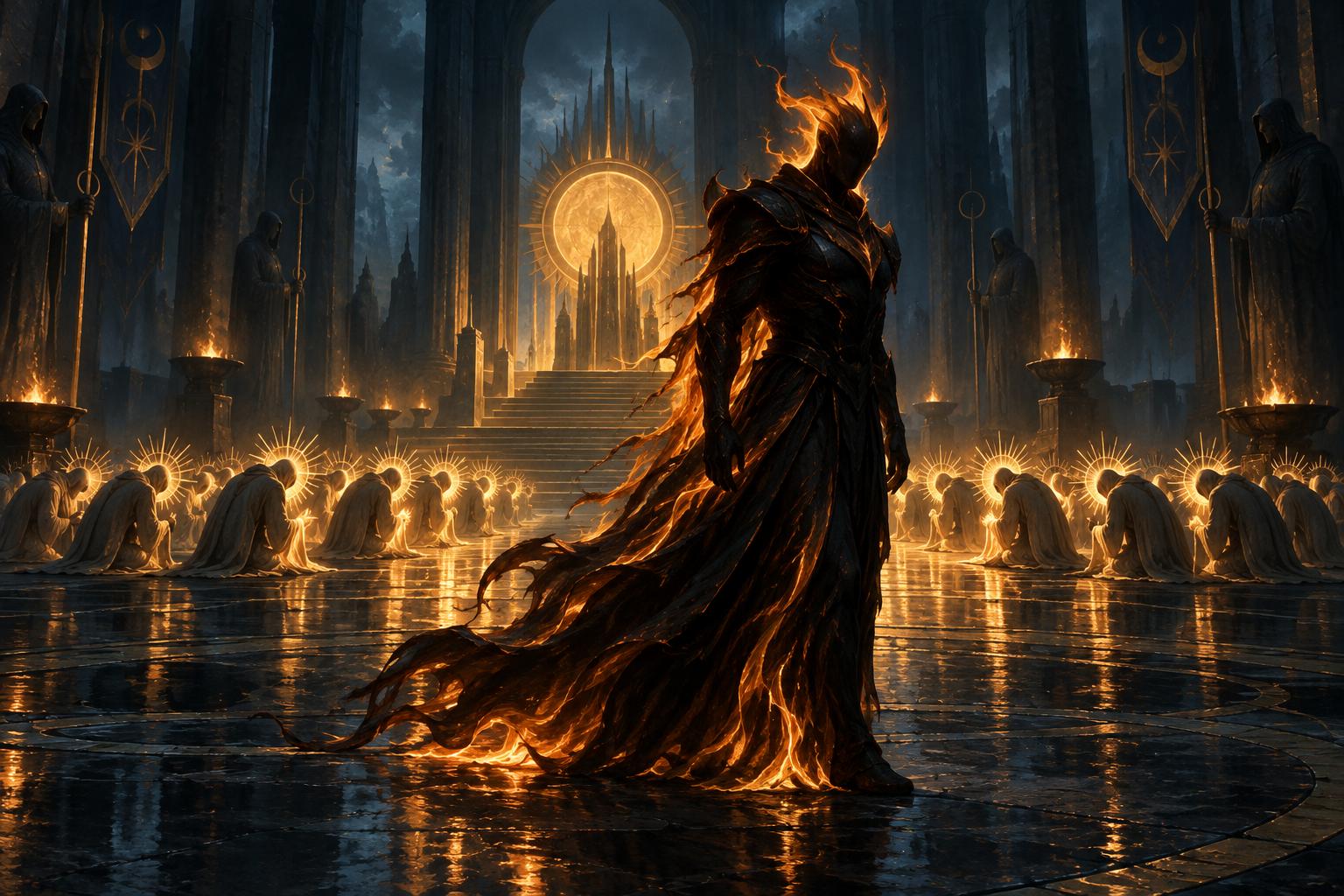
Who is Shaitan? Learn the shaitan meaning in Arabic and Islamic sources, how Iblis relates to the shayatin, and how shaitan differs from jinn.
Quick answer: Shaitan (also spelled shaytan or shaitaan) is the Arabic word for a rebellious, misleading spirit, and in Islamic usage it names both one individual and a whole category. The individual is Iblis, the jinn who refused to bow to Adam and was cast out; the category is any devil, whether jinn or human, that whispers temptation. So when people ask who is Shaitan, the short answer is: Iblis is the Shaitan, and the shayatin are the many who follow his path.
Related guides: jinn in Islamic scripture and hadith, the qareen companion jinn, are jinn evil or morally mixed, Surah Al-Jinn explained, the main types of jinn, what tradition says repels jinn.
| Term | What it refers to | Where it appears |
|---|---|---|
| Shaitan / Shaytan (al-Shaytan) | The Devil as an individual; in context, Iblis | Surah 2:36, 7:20, 20:120 |
| Shayatin (plural) | Devils in general, from among jinn and humans | Surah 6:112, 2:102, 37:7 |
| Iblis | Proper name of the first shaitan, who refused to bow to Adam | Surah 2:34, 7:11-18, 18:50 |
| Jinn | The wider created species, some believing and some not | Surah 72, 55:15, 51:56 |
| Qareen | A companion jinn attached to each person | Surah 43:36, 50:23; hadith |
| Waswas / waswasa | The whisper, the characteristic action of a shaitan | Surah 114:4-6, 7:20, 20:120 |
Key Takeaways
The word shaitan comes from the Arabic root sh-t-n, which carries the sense of being distant, removed or rebellious. In pre-Islamic Arabic the word was already used for anything stubborn and hostile, and it could describe a rebellious jinn, a serpent, or even a fiercely proud man. The Quran takes this existing word and gives it a fixed theological role: a shaitan is a being that has turned away from God and now works to pull others away too.
So the shaitan meaning has two layers. In the singular with the definite article, al-Shaytan, it usually points to one figure, the Devil, whose personal name in the Quran is Iblis. In the plural, shayatin, it describes a whole class of devils. Surah 6:112 is the clearest statement of this: it speaks of “shayatin of mankind and jinn” who inspire one another with decorated speech. The category is defined by behavior, not by what a being is made of.
This is the first thing to understand when asking who is Shaitan. He is not a separate species alongside angels, jinn and humans. He is a jinn who became the archetype of rebellion, and his title then spread to every being who imitates him. Readers who want the broader background can start with our guide to jinn in Islam.
Iblis and Shaitan are the same being viewed from two angles. Iblis is the proper name, used in the Quran almost exclusively in the story of Adam’s creation. Shaitan is the descriptive title, used when the text turns to what he does: tempting, whispering, promising, and abandoning. The name tells you who he is; the title tells you what he has become. When Surah 2:34 says that all the angels bowed “except Iblis,” the very next verses switch to “Shaytan” as he causes Adam and his wife to slip.
The origin of the name Iblis is debated. Many Muslim scholars derived it from the Arabic root b-l-s, to despair, so that Iblis is “the one who despaired of God’s mercy.” Many Western philologists instead see an Arabic adaptation of the Greek diabolos. What is not debated is Surah 18:50: Iblis “was of the jinn, and he departed from the command of his Lord.”
That verse resolves a question readers often ask: was Iblis a fallen angel? In mainstream Islamic reading, no. Angels in the Quran do not disobey, while jinn have free will and can choose. Iblis was a jinn who, tradition holds, had risen to worship among the angels through his devotion, which makes his refusal a choice rather than a flaw in his nature.
Does this touch your own situation? Many readers come to these pages because something in their home, dreams or family feels unexplained. Reading history helps, but it cannot look at your specific case.
Consult the Sheikh Private, confidential, and free to ask.
The Quran returns to the shaitan dozens of times, and the references fall into a few recognizable groups.
The core narrative appears in Surah 2:34, 7:11-18, 15:28-43, 17:61-65, 20:116-123 and 38:71-85. Iblis refuses to prostrate to Adam, arguing that fire is nobler than clay. He is cast out, asks for respite until the Day of Resurrection, and is granted it. He then vows to mislead humanity, and God replies that he will have no authority over sincere servants, only over those who choose to follow him.
The shaitan’s method is waswasa, the whisper. Surah 7:20 and 20:120 use the verb for his approach to Adam, and Surah 114 ends with a prayer for refuge from “the whisperer who withdraws, who whispers in the breasts of mankind, from among jinn and men.” The emphasis is on suggestion, not force. Surah 14:22 even has the shaitan disown his followers at the end, saying he only called and they answered.
Surah 37:6-10, 15:16-18 and 72:8-9 describe shayatin trying to listen at the edge of the heavens and being driven off by flaming missiles. This passage is one root of the belief that fortune-tellers receive garbled scraps from jinn.
Surah 21:82 and 38:37-38 describe shayatin who dived for Solomon and built for him, some bound in chains. Here the word is used for rebellious jinn pressed into labor, which shows that “shaitan” could describe a class of jinn and not only Iblis.
The simplest way to hold the relationship is as nested circles. Jinn is the species: beings created from smokeless fire, according to Surah 55:15, who eat, marry, die and will be judged. Some jinn believe and some do not, as Surah 72 makes clear when a group of jinn hears the Quran and says that among them are the righteous and “others less than that.” Shaitan is a label inside that species for those who have chosen rebellion and actively mislead others. Every shaitan among the jinn is a jinn, but most jinn are not called shayatin.
The Quran also applies the word to humans. In Surah 2:14, hypocrites go back to “their shayatin,” meaning their human leaders in disbelief. So shaitan vs jinn is not a comparison of two species; it is a comparison between a species and a moral role that cuts across species.
For a closer look at how the sources describe jinn who are not devils at all, see our discussion of whether jinn are evil, which walks through Surah 72 line by line.
Hadith literature adds detail that the Quran leaves open. One well-known report in Sahih Muslim has the Prophet say that every person has been assigned a companion from the jinn, and when asked whether that included himself, he replied that God had helped him so that his companion only commanded good. This is the basis of the qareen concept, which later tradition sometimes treats as a personal shaitan and sometimes as a neutral jinn. Our separate article on the qareen covers that distinction.
Other reports describe the shaitan’s habits in daily life. He is said to flee at the call to prayer, to be chained during Ramadan, and to run through a person like blood. Muslim scholars have long debated how literally each should be read. Together they shape a picture of a constant, close, but limited adversary whose power ends where a person’s own choice begins.
Later tradition also gave the shayatin a social world: Iblis’s throne over the water, lieutenants assigned to specific sins, named sons who tempt in particular ways. These accounts are not in the Quran and vary by author. They should be read as folklore built around the scriptural core rather than as scripture itself.
English readers naturally hear “Satan” when they read “Shaitan,” and the words are related. Hebrew satan means an adversary or accuser; in Job and Zechariah ha-satan is a member of the heavenly court who tests and accuses. Only in later Jewish writing, and then strongly in the New Testament, does Satan become the chief of evil spirits and the one cast out of heaven.
The Quranic Shaitan shares the tempter role and the expulsion story but differs in important ways. Iblis is not an angel; he is a jinn. His fall is tied to pride before Adam, not to a war in heaven. He has no kingdom of hell of his own; he is a prisoner awaiting judgment like everyone else. And the Quran repeatedly limits his power: he can call, decorate and whisper, but he cannot compel. Surah 16:99-100 states that he has no authority over those who trust in God, only over those who take him as a patron.
This is why translations can mislead. Rendering al-Shaytan as “Satan” is correct but imports a picture of horns, hell and cosmic war that the Arabic text does not carry.
The most frequent error is treating shaitan as a species name, as if there were angels, jinn, humans and shayatin. The Quran gives no fourth category. The second error runs the other way: assuming every jinn is a shaitan. Surah 72 describes jinn who believed on hearing the Quran, and treating the whole species as devils erases that variety.
A third misunderstanding concerns possession. Popular films present the shaitan primarily as a force that seizes bodies. The Quran’s vocabulary points elsewhere: the shaitan whispers, decorates, promises and frightens. Belief in jinn-related possession exists in Islamic tradition and is debated among scholars, but it is not the central Quranic description. Readers interested in how tradition describes protection will find the beliefs collected in our article on what jinn are said to fear.
Finally, many readers assume Iblis is a fallen angel because of the parallel with Lucifer. Surah 18:50 is explicit that he was of the jinn, and holding onto that verse resolves most of the confusion between iblis vs shaitan vs jinn in one step.
Interest in the shaitan rises from several directions at once. Students of comparative religion want to know how the Islamic Devil differs from Satan. Muslim readers search for the exact verses behind phrases they hear in sermons. Fans of fantasy fiction and games meet “shaitan” as a monster type and want a clear, non-sensational explanation of who is Shaitan in the original sources.
Whatever the starting point, a few habits make the reading more reliable. Check the verse numbers rather than relying on summaries, since the refusal story is told in at least six places with different emphases. Notice whether a passage uses the singular with the article, the plural, or the name Iblis, because each carries a different scope. Separate the Quranic core from hadith, and both from later folklore and modern fiction.
Read this way, the shaitan is less a horror-movie figure and more a precise theological concept: a jinn who chose pride, a title for everyone who imitates that choice, and a voice that can suggest but never force.
Still have a question about your own experience? Describe what you are seeing, feeling or dreaming, and when it started. The Sheikh reads every message personally and replies in private.
Want a personal perspective? Reading about Shaitan and the whispering of temptation often turns into reflection on our own choices and inner struggles. If you would like a calm space to think through what is on your mind, a Full Personal Reading with our partner PuraTarot offers gentle personal reflection. Join the free Djinn Guide newsletter and, once you confirm, you will unlock a 50% code for your first reading.
Further reading
As an Amazon Associate we earn from qualifying purchases.
In Islam, Shaitan (al-Shaytan) most often refers to Iblis, the jinn who refused God's command to bow to Adam and was expelled, then given respite to tempt humanity until the Day of Judgment. The plural, shayatin, refers to all devils among jinn and humans who follow his example by whispering temptation. The Quran describes his power as suggestion only, never compulsion.
They are the same being under two names. Iblis is his proper name, used in the Quran in the story of Adam's creation. Shaitan is his title, meaning the rebellious one, used when the text describes his actions as tempter. The title is also used in the plural for every devil, whereas Iblis names only the first and chief of them.
According to Surah 18:50, Iblis "was of the jinn." Mainstream Islamic scholarship therefore treats him as a jinn, not a fallen angel, since angels in the Quran do not disobey. His presence among the angels when the command to bow was given reflects his status at the time, not his nature. The fallen-angel idea comes mainly from the Christian Lucifer tradition.
Shaitan comes from the Arabic root sh-t-n, carrying the sense of being far removed, rebellious or hostile. Before Islam it described any stubborn, defiant being, including serpents and proud men. In the Quran it becomes the standard term for a devil, a being that has turned away from God and works to lead others away through whispering and false promises.
No. Jinn are a species with free will, and the Quran in Surah 72 describes jinn who heard the Quran and believed, as well as others who did not. Shaitan is a title for those who choose rebellion and actively mislead, and it applies to humans as well as jinn. So all shayatin among the jinn are jinn, but most jinn are not shayatin.
Disclaimer
This article describes the figure of the shaitan as presented in Islamic scripture, hadith and later tradition, alongside comparisons with Jewish and Christian sources. Beliefs are described for educational and cultural understanding, not endorsed or disputed, and nothing here is intended as religious ruling or ritual guidance.
Did this guide help you understand the subject? Rate it and share your honest opinion to help other readers. Every review is checked by our editors before it appears.
There are no reviews yet. Be the first one to write one.


Sheikh Youssef
Tayeb El Merzouki
For inquiries about personalized spiritual work, private rituals, and traditional talismans, connect directly with Sheikh Youssef Tayeb El Merzouki.
Chat on WhatsApp