





Join Djinn Guide: Get 50% Off a Personal Reading
Get new guides to jinn, folklore and occult history. Confirm your subscription to unlock a 50% code for a first personal reading with our partner PuraTarot.
Discover the unseen
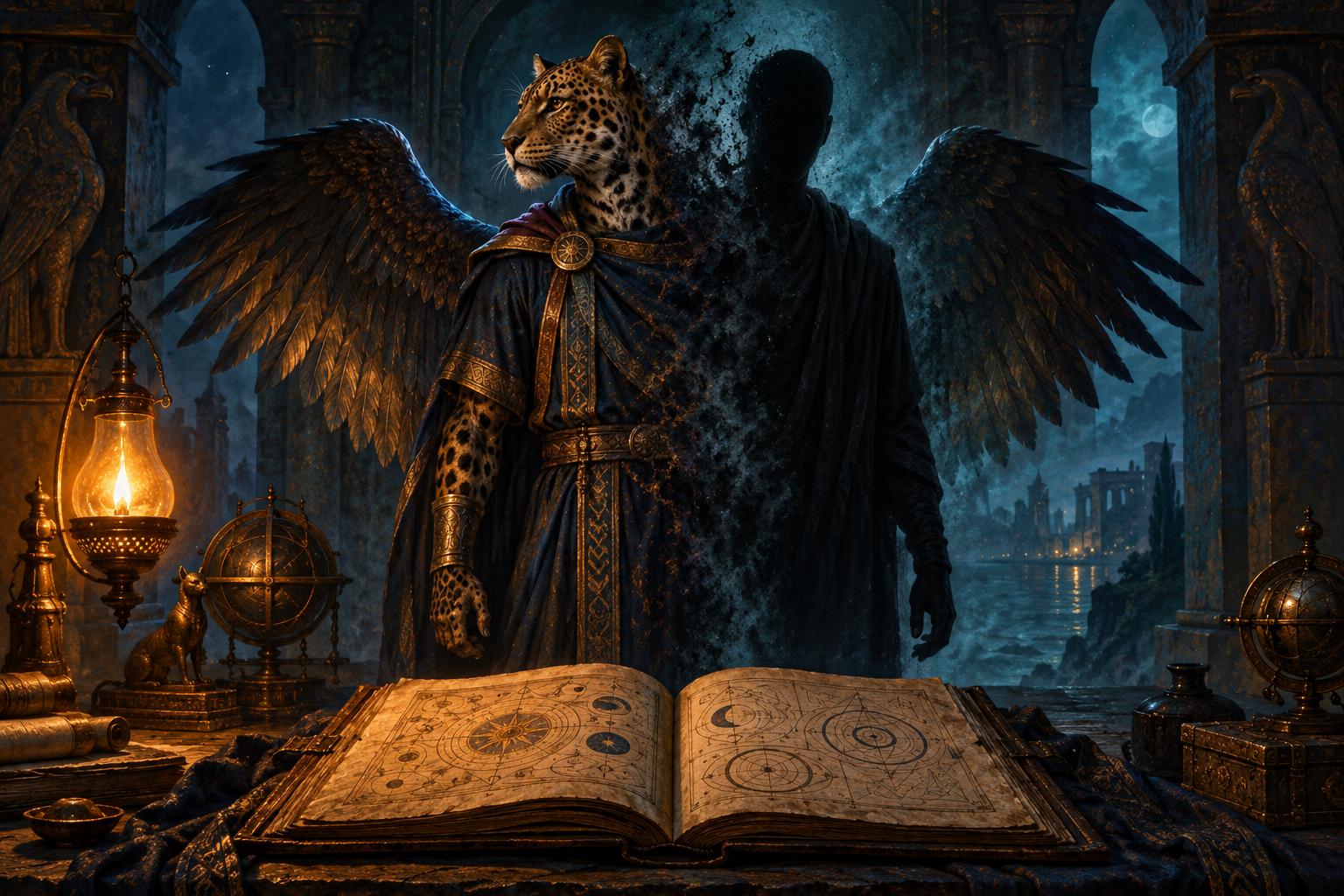
Sitri demon explained: the twelfth spirit of the Ars Goetia, a prince with a leopard's head and griffin wings, his sigil, offices, 60 legions, and sources.
Quick answer: The Sitri demon is the twelfth spirit of the Ars Goetia, the first book of the Lesser Key of Solomon, where he is ranked as a Great Prince commanding 60 legions. The text describes him appearing first with a leopard's head and the wings of a griffin, then taking a beautiful human form when instructed. His office concerns love and desire between men and women. Older sources, including Johann Weyer's catalogue of 1577, call him Sitri or Bitru, and later demonologists copied those lines almost unchanged.
Related guides: the full list of 72 Goetia demons, what a prince rank means in the Goetia, Ars Goetia names, offices and sigils, Dantalion, the many-faced duke, Gremory, the duchess of the Goetia, manuscript and printed Goetia editions.
| Spirit | Goetia number and rank | Legions | Appearance in the Lemegeton | Office |
|---|---|---|---|---|
| Sitri (Bitru) | 12, Great Prince | 60 | Leopard's head, griffin wings; then a beautiful human form | Kindles love between men and women |
| Beleth | 13, Mighty King | 85 | Rides a pale horse, preceded by trumpets and music | Causes love between men and women |
| Zepar | 16, Great Duke | 26 | A soldier in red clothing and armor | Causes women to love men |
| Sallos (Saleos) | 19, Great Duke | 30 | A gallant soldier riding a crocodile, wearing a ducal crown | Causes love between the sexes |
| Gremory (Gomory) | 56, Strong Duke | 26 | A beautiful woman with a duchess's crown, riding a camel | Tells of past and future, finds treasure, procures the love of women |
Key Takeaways
Sitri is the twelfth of the 72 spirits catalogued in the Ars Goetia, the opening book of the Lesser Key of Solomon, a grimoire compiled in English in the mid-seventeenth century from older Latin and continental material. The Mathers and Crowley edition of 1904, the version most readers know, introduces him as a Great Prince who appears at first with a leopard’s head and the wings of a griffin, and who, at the command of the operator, puts on human shape and becomes very beautiful. He governs 60 legions of spirits.
His office is narrow and specific. The text says he enflames men with the love of women and women with the love of men, and that he can cause people to show themselves without clothing if the operator desires it. The Goetia treats this as one of several love-related services alongside those of Beleth, Zepar, and Sallos. The description is not moralized; the compiler simply records what the spirit was believed to do, as a merchant might list goods.
Within the Goetia’s feudal scheme, princes sit below kings and dukes in number but are considered powerful. Sitri shares the title with Vassago, Ipos, Gaap, Stolas, Orobas, and Seere. The title is explained alongside the other ranks in what a prince rank means in the Goetia. Like every entry in the catalogue, Sitri’s description is a literary and historical artifact, and this site does not provide instructions for calling or working with any spirit.
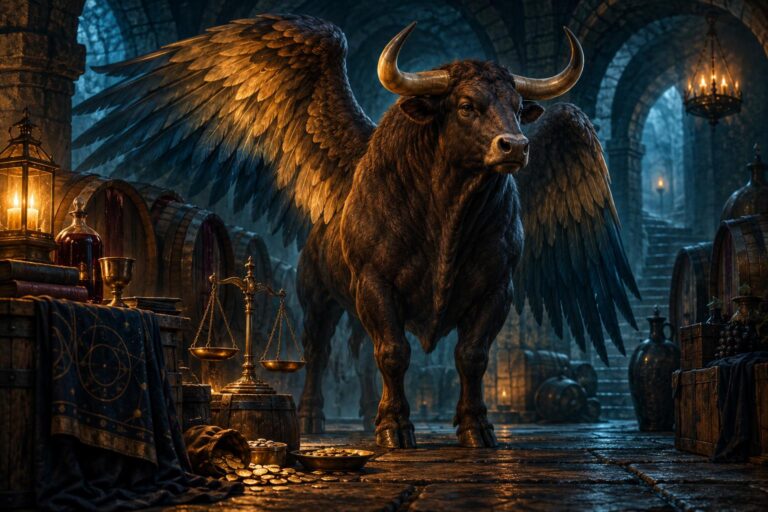
The leopard and griffin combination is unusual in the Goetia, which favors lions, dogs, and horses. The leopard’s head suggests speed and stealth, animals of the hunt, while griffin wings link Sitri to a family of spirits that includes Focalor and Vepar, whose griffin features point to the air and sea. The transformation into a beautiful human is the key to his character: the beast form is the warning, the human form is the lure. Several love spirits follow this pattern of appearing first in a monstrous guise and then softening.
Each Goetia spirit has a seal or sigil, a line drawing that the grimoire says must be shown to the spirit and worn by the operator. The Mathers edition prints Sitri’s sigil as a compact figure of interlocking straight and curved strokes, with small circles at several line ends and a pair of outward-flaring arms that give it a loosely winged silhouette. Like the other 71 seals it is not a picture of the spirit but a signature, drawn differently in different manuscripts. The general idea of such signatures is explained in the site’s guide to Ars Goetia names, offices and sigils.
The 1904 edition also assigns each rank a metal. Princes are to be drawn in tin, kings in gold, dukes in copper, marquises in silver. These attributions come from the planetary correspondences of Renaissance magic rather than from any early manuscript, and they tell us more about Mathers and his Golden Dawn background than about the seventeenth-century compiler.
Does this touch your own situation? Many readers come to these pages because something in their home, dreams or family feels unexplained. Reading history helps, but it cannot look at your specific case.
Consult the Sheikh Private, confidential, and free to ask.
The earliest printed description of Sitri appears in the Pseudomonarchia Daemonum, an appendix that the Dutch physician Johann Weyer attached to the 1577 edition of his De praestigiis daemonum. Weyer, a critic of witch trials, published the catalogue of 69 spirits to expose what he regarded as the absurdity of conjurers’ claims, deliberately leaving out the seals and parts of the operation. His entry reads, in Reginald Scot’s 1584 English translation, that Sitri, also called Bitru, is a great prince who appears with the face of a leopard and the wings of a griffin, takes a beautiful human shape when commanded, inflames men and women with love, and commands 60 legions.
This is almost exactly the text that reappears in the Lemegeton seventy years later. The main differences are order and framing. Weyer’s list does not number the spirits in the same sequence, so Sitri is not his twelfth entry, and Weyer offers no sigils. The compiler of the Goetia reorganized the list, added seals and the four spirits Weyer lacked (Vassago, Seere, Dantalion, and Andromalius), and dressed the whole in Solomonic legend. Readers can see how the counting shifted between editions in the site’s survey of the full list of 72 Goetia demons.
The alias Bitru has no secure etymology. Some modern writers link Sitri to Set or to Ishtar, but these are guesses. The safest statement is that both names were in circulation in sixteenth-century Latin manuscripts, and Weyer printed both.
Jacques Collin de Plancy’s Dictionnaire Infernal, first published in 1818 and famous for the 1863 edition illustrated by Louis Le Breton, gave many Goetia spirits their modern visual identity. Sitri, spelled Sytry in the French, receives a brief entry that repeats Weyer: a prince of hell with a leopard’s head and griffin wings who becomes beautiful when ordered to take human form, with the same office of love and the same 60 legions. Unlike Amon, Andras, or Malphas, Sitri is not among the spirits that Le Breton drew, so he has no iconic nineteenth-century portrait.
That absence matters for how the spirit is pictured today. Illustrators working from the text alone produce a range of images, from a sleek leopard-headed youth to a winged big cat. None has the authority of a Le Breton engraving. When you see a confident drawing of Sitri online, it is a modern artist’s interpretation of two sentences of sixteenth-century Latin.
Later demonological compendia, from the Victorian occult revival to twentieth-century encyclopedias of demons, add nothing new. They copy Weyer or Mathers, sometimes adding planetary hours, colors, or incense from Golden Dawn tables, which are modern correspondences rather than part of the historical record.
The Goetia does not group its spirits by theme, but reading the catalogue closely reveals clusters. Five or six spirits deal with love, and setting them side by side shows how the compiler varied a single idea.
Beleth, spirit 13, comes immediately after Sitri and performs the same office of causing love between men and women. He is a king with 85 legions, arrives on a pale horse with trumpets, and is described as fierce until treated with courtesy. The pairing of a prince and a king with identical offices suggests the compiler drew on two sources.
Zepar, spirit 16, appears as a soldier in red, and Sallos, spirit 19, rides a crocodile wearing a ducal crown. Both procure love, and Sallos is noted as peaceable. Their military appearance contrasts with Sitri’s animal form.
Gremory, spirit 56, appears as a crowned woman on a camel and is said to procure the love of women and to find hidden treasure; her entry is examined in Gremory, the duchess of the Goetia. Dantalion, spirit 71, shows many faces and is said to know and change the thoughts of any person, which the text frames as an ability to cause love; see Dantalion, the many-faced duke. Sitri is the plainest of the group: no treasure, no secret knowledge, only desire.
Because Sitri’s entry is short, a good deal has been projected onto it. The following points separate what the sources say from what has grown up around them.
Sitri has a modest afterlife in popular media. The Japanese light novel and anime series High School DxD names a devil family Sitri and gives one of its leading characters the surname. The Shin Megami Tensei video game franchise includes Sitri among its recruitable demons, usually drawn with leopard and wing features taken straight from Weyer. The manga Makai Ouji: Devils and Realist casts Sytry as a prominent character. In each case the medieval description supplies a visual hook and the office of love supplies a personality.
People search for the Sitri demon for three main reasons: they met the name in one of these series, they are reading through the 72 spirits and want each entry explained, or they are curious whether the love spirits of the Goetia connect to older magic. The honest answer to the last question is that love magic is ancient, attested in Greek curse tablets and Arabic manuals, but the specific figure of Sitri is a product of the late medieval and Renaissance grimoire tradition.
To read the sources well, compare three texts in order: Weyer’s Latin of 1577 or Scot’s 1584 English, a seventeenth-century Lemegeton manuscript such as Sloane 2731 in the British Library, and the Mathers and Crowley edition of 1904. Notice what each adds. Weyer gives the description, the manuscripts add the seal and the Solomonic frame, and Mathers adds metals, planetary notes, and a modern occult reading. This site describes these texts as history and does not provide instructions for invoking or binding any spirit.
Still have a question about your own experience? Describe what you are seeing, feeling or dreaming, and when it started. The Sheikh reads every message personally and replies in private.
Is a relationship on your mind? Sitri’s place in the Goetia as a spirit of attraction shows how long people have looked for answers about desire and connection. If you have a relationship question of your own, the Relationship Harmony Ritual from our partner PuraTarot offers a reflective way to focus on warmth and harmony. Join the free Djinn Guide newsletter and, once you confirm, you will unlock a 50% code for your first reading.
Further reading
As an Amazon Associate we earn from qualifying purchases.
Sitri is the twelfth spirit of the Ars Goetia, ranked as a Great Prince with 60 legions. The Lemegeton describes him with a leopard's head and griffin wings, able to take a beautiful human form, and assigns him the office of kindling love between men and women. Johann Weyer's 1577 catalogue also calls him Bitru.
According to the Lesser Key of Solomon, Sitri first appears with the head of a leopard and the wings of a griffin. When the operator commands it, he takes on a human body described as very beautiful. He has no classic nineteenth-century illustration, since Louis Le Breton did not draw him for the Dictionnaire Infernal.
The Sitri sigil is the seal printed beside his entry in the Mathers and Crowley edition of the Goetia (1904): a compact figure of straight and curved strokes with small circles at the line ends and two outward-flaring arms. It is a signature rather than a portrait, and older manuscripts draw it with small differences.
Yes. Weyer's Pseudomonarchia Daemonum (1577) lists the spirit as Sitri, also called Bitru, and the Dictionnaire Infernal uses the spelling Sytry. All three names refer to the same leopard-headed prince with the same office and the same 60 legions; the variation reflects copying between Latin, French, and English texts.
Sitri holds the rank of prince, one of seven princes in the Goetia alongside Vassago, Ipos, Gaap, Stolas, Orobas, and Seere. The Mathers edition associates princes with the metal tin. Rank in the Goetia indicates standing within the text's feudal scheme and does not correspond to the order of the numbered list.
Disclaimer
This article describes the Sitri demon as he appears in historical grimoires and demonological literature, for educational and cultural purposes only. The beliefs recorded here are presented as beliefs, and no ritual, invocation, or binding instructions are given or implied.
Did this guide help you understand the subject? Rate it and share your honest opinion to help other readers. Every review is checked by our editors before it appears.
There are no reviews yet. Be the first one to write one.


Sheikh Youssef
Tayeb El Merzouki
For inquiries about personalized spiritual work, private rituals, and traditional talismans, connect directly with Sheikh Youssef Tayeb El Merzouki.
Chat on WhatsApp