





Join Djinn Guide: Get 50% Off a Personal Reading
Get new guides to jinn, folklore and occult history. Confirm your subscription to unlock a 50% code for a first personal reading with our partner PuraTarot.
Discover the unseen
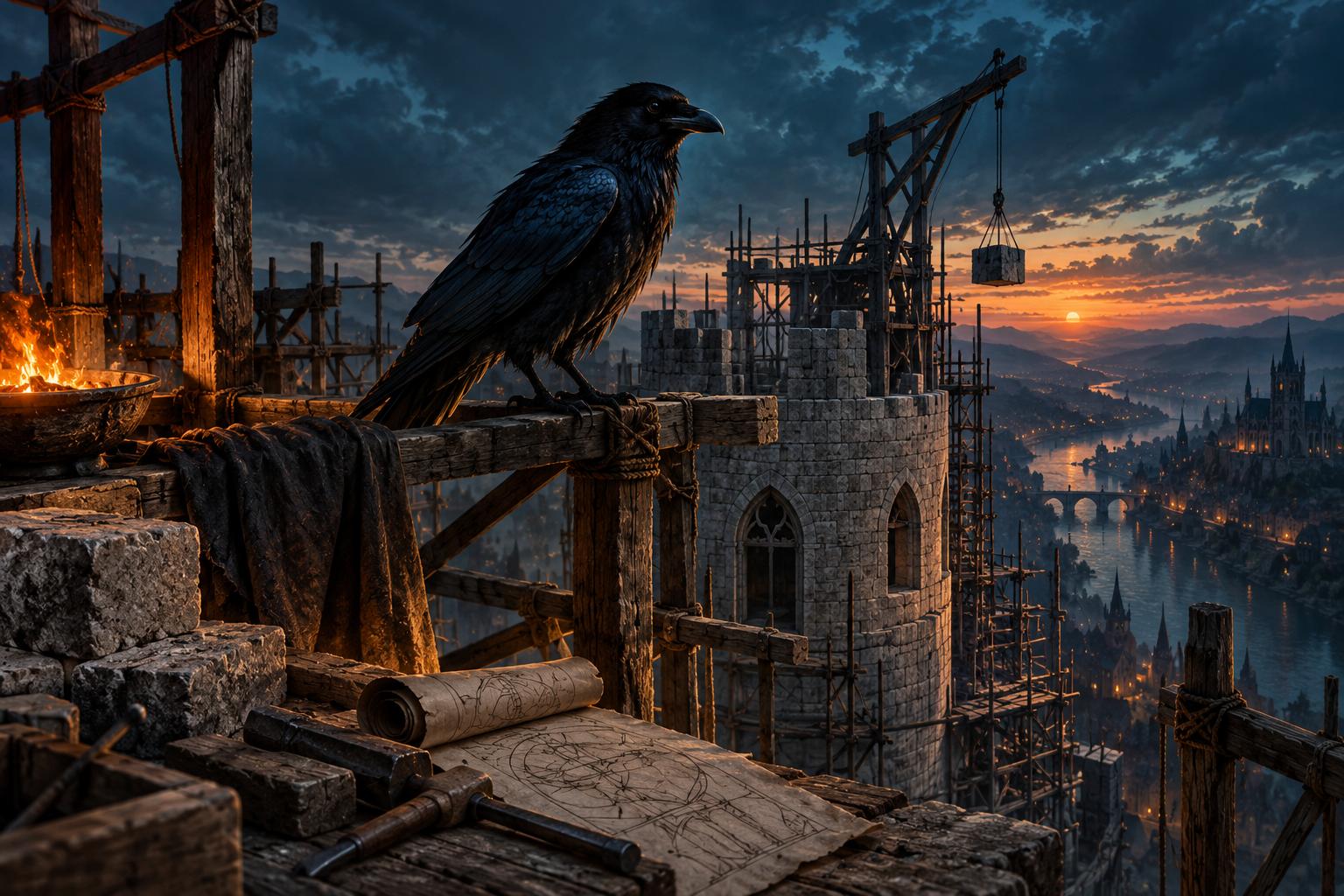
Malphas demon explained: the 39th spirit of the Ars Goetia, a president who appears as a crow and builds towers. Rank, legions, offices, sigil and sources.
Quick answer: Malphas is the 39th spirit of the Ars Goetia, ranked as a mighty president and said to command 40 legions. The Lemegeton describes Malphas appearing first as a crow and then, at the operator's request, in human form, speaking with a hoarse voice. His offices are to build houses and high towers, to bring together artificers, to reveal and overturn the plans of enemies, and to give good familiars. The entry adds a warning that he deceives anyone who offers him a sacrifice.
Related guides: the complete 72 demons list, Ars Goetia names, offices and seals, what a Goetia president is, Raum, the other crow spirit, Halphas, builder of towers, Amon with the raven's head.
| Spirit | Number and rank | Legions | Form in the Lemegeton | Main offices |
|---|---|---|---|---|
| Malphas | 39, President | 40 | A crow, then a man with a hoarse voice | Builds houses and towers; gathers artificers; overturns enemies' plans; gives familiars |
| Raum | 40, Earl | 30 | A crow, then a man | Steals treasure; destroys cities and dignities; tells past, present and future |
| Halphas | 38, Earl | 26 | A stork with a hoarse voice | Builds towers; furnishes them with weapons; sends men to war |
| Amon | 7, Marquis | 40 | A wolf with a serpent's tail, then a man with a raven's head | Tells past and future; reconciles friends and foes |
Key Takeaways
The Malphas demon is the thirty-ninth entry in the Ars Goetia, the first of the five books of the Lemegeton or Lesser Key of Solomon. In the 1904 Mathers and Crowley edition the text calls him a mighty president who first appears in the form of a crow and then, when the operator requests it, takes a human shape and speaks with a hoarse voice. He is said to govern 40 legions of spirits, placing him in the middle of the catalog by that measure.
Four offices are assigned to him. He can build houses and high towers. He can bring artificers, meaning skilled craftsmen, together from any place. He can make known to the operator the thoughts, desires and works of enemies, and bring those works to nothing. And he gives good familiars, lesser spirits attached to a person. The Lemegeton closes the entry with a caution: if any sacrifice is made to him he will receive it kindly and willingly, but he will deceive the one who offers it.
That last line is distinctive. Most Goetia entries read like job descriptions for a spirit court; a direct warning about the spirit’s treachery is rare, and it gives Malphas a slightly sinister reputation among readers of the complete 72 demons list.
The earliest printed source is Johann Weyer’s Pseudomonarchia Daemonum of 1577, which Reginald Scot rendered into English in his Discoverie of Witchcraft (1584). Weyer’s Malphas is a great president who appears as a crow and then, at the exorcist’s request, as a man with a hoarse voice. He builds houses and high towers, brings together artificers, overthrows the buildings of enemies, reveals their thoughts and desires, and gives good familiars. Weyer also includes the sacrifice warning and the figure of 40 legions. The Lemegeton entry is essentially the same text with a seal added.
Collin de Plancy’s Dictionnaire Infernal (1818) summarizes Weyer in French, and the 1863 edition carries Louis Le Breton’s engraving: a large crow standing in profile, feathers slightly ruffled, with nothing else in the frame. Because the illustration is so plain, Malphas is less visually famous than spirits with fantastic hybrid bodies, but the crow image is now standard in modern reference works and games.
None of the three sources explains the name. “Malphas” has no secure etymology; proposals connecting it to Hebrew or Latin roots are modern guesses. Like most of the Goetia’s lesser-known names, it probably arose within the late medieval grimoire tradition itself. The spirit is absent from the Bible, the Testament of Solomon and classical demonology.
Does this touch your own situation? Many readers come to these pages because something in their home, dreams or family feels unexplained. Reading history helps, but it cannot look at your specific case.
Consult the Sheikh Private, confidential, and free to ask.
The Malphas sigil printed in the Mathers edition is an angular, upright figure with a vertical central axis, short horizontal cross-strokes, and small circles closing several of its line ends. It resembles a stylized standard or staff more than a bird, and it carries no obvious pictorial meaning. Manuscript copies of the Lemegeton show minor variations in the number of cross-strokes and terminal circles, so the printed version should be treated as one rendering among several rather than a fixed emblem.
In the Goetia the seal is called the spirit’s character and is described as something the operator wears or displays. Djinn Guide does not reproduce ritual instructions and does not explain how seals were used; the description here is purely for identifying the symbol in historical sources. For a broader look at how these marks developed, see Ars Goetia names, offices and seals.
Each element of the Malphas entry has roots in older European ideas, and taking them one at a time makes the profile easier to understand.
Crows and ravens were birds of omen across Europe, associated with battlefields, prophecy and the dead. Several Goetia spirits take corvid forms, which suggests the compilers drew on a shared stock of ominous imagery rather than inventing each description fresh.
Spirits who raise buildings are a direct echo of the Solomon legend, in which the king compels demons or jinn to construct the Temple in Jerusalem. The Testament of Solomon and Islamic sources both describe this labor. Malphas and his neighbor Halphas carry that motif into the grimoire, so that the “architect spirit” is a small reminder of where the whole tradition claims to come from.
Gathering craftsmen and exposing enemies’ plans reflect what a Renaissance prince or merchant might want: skilled labor and intelligence. The catalog often reads as a wish list of the period’s practical concerns.
The caution against sacrifice likely reflects a theological point insisted on by sources like Weyer, who was writing to discredit magic: any spirit that accepts offerings is a deceiver by nature. It is the grimoire quietly agreeing with its own critics.
The Goetia places Malphas between two spirits that share his features. Halphas, number 38, is an earl who appears as a stork with a hoarse voice and builds towers stocked with weapons. Raum, number 40, is an earl who appears as a crow and then as a man, and who steals treasure and destroys cities. Read together, 38 through 40 look like a small cluster of bird-formed spirits concerned with construction and destruction, which may reflect the order of an older source list.
Amon, number 7, offers another comparison: he appears as a wolf with a serpent’s tail and then as a man with a raven’s head, and he deals in reconciliation and prophecy. The raven head makes him the third corvid in the catalog. The table above lines up all four. For what the ranks of president, earl and marquis were thought to imply, see our guide to Goetia ranks and hierarchy.
In legion counts Malphas, at 40, matches Amon and exceeds both Raum and Halphas. The Lemegeton does not explain how these numbers were assigned, and they vary slightly between manuscripts. They are best read as part of the catalog’s imitation of a royal muster roll rather than as meaningful quantities.
The first misunderstanding is that Malphas and Raum are the same spirit under two names. They are separate entries with different ranks, legion counts and offices; only the crow form and the sequence in the list connect them. Older manuscripts keep them distinct as well.
The second is that Malphas has an ancient origin, perhaps as a Near Eastern deity. Unlike Astaroth or Bael, there is no evidence for this. The name first appears in the sixteenth-century printed lists and their manuscript ancestors.
The third is that the sacrifice warning means Malphas is uniquely evil. Weyer and the Lemegeton treat all 72 spirits as fallen and untrustworthy; the warning is simply made explicit in his case. Modern fiction has amplified the line into a defining trait.
The fourth is that Le Breton’s 1863 crow is a traditional image. It was drawn from the text for a Paris publisher and has no older pedigree. It is a nineteenth-century illustration of a sixteenth-century description.
Most searches for the Malphas demon today come from games and comics. The Shin Megami Tensei and Persona franchises include Malphas as a demon, usually in crow or crow-headed form. The video game Devil May Cry 5 features a boss named Malphas, reimagined as a bird-like demon with a female humanoid body. The name also appears in tabletop role-playing supplements, metal band lyrics and webcomics that mine the Goetia for characters.
These uses keep the crow and the name and discard the Lemegeton’s offices. They are not sources about the historical entry, and they should not be read as evidence of what the grimoire tradition believed. The interest of the historical Malphas lies in what he shows about Renaissance ideas of spirits, buildings and betrayal, not in any modern design.
Begin with Weyer and Scot, then compare the Lemegeton manuscripts and the Mathers printing. The substance barely changes across three centuries, which tells you how conservative the copying tradition was. The Dictionnaire Infernal adds nothing but the picture. Modern commentaries that add elaborate personalities, planetary attributions or colors are drawing on nineteenth- and twentieth-century occult systems, not on the early texts.
Then read the entry for what it reveals about its audience: people who wanted buildings raised, workers found, rivals exposed and helpers supplied. The Goetia is a catalog of early modern wishes dressed in the language of a spirit court. Djinn Guide presents it as cultural history and provides no instructions for invoking, binding or working with any spirit.
Still have a question about your own experience? Describe what you are seeing, feeling or dreaming, and when it started. The Sheikh reads every message personally and replies in private.
Curious what this image says to you? Malphas, the crow who raises towers and throws them down, is a striking picture of the things we build and the things we let fall. If that picture speaks to a question in your own life, a Full Personal Reading with our partner PuraTarot offers a calm space for reflection. Join the free Djinn Guide newsletter and, once you confirm, you will unlock a 50% code for your first reading.
Further reading
As an Amazon Associate we earn from qualifying purchases.
Malphas is the 39th spirit of the Ars Goetia, a president said to rule 40 legions. The Lemegeton describes him as a crow who takes human form on request and speaks hoarsely. His offices are building houses and towers, gathering craftsmen, revealing enemies' plans and giving familiars.
In the Lemegeton and Weyer's Pseudomonarchia Daemonum he appears first as a crow, then as a man with a hoarse voice. The 1863 Dictionnaire Infernal illustration by Louis Le Breton shows him simply as a large crow, which is the image most modern references and games follow.
The entry says he accepts sacrifices willingly but deceives the one who offers them. This likely reflects the theological stance of sources like Weyer, who wrote to discredit magic: any spirit that takes offerings is treacherous by nature. It is one of the few explicit warnings in the catalog.
No. Both appear as crows and sit next to each other in the list, but Malphas is number 39, a president with 40 legions who builds and exposes enemies, while Raum is number 40, an earl with 30 legions who steals treasure and destroys cities. All sources keep them separate.
He appears as a crow-like demon in the Shin Megami Tensei and Persona series and as a boss in Devil May Cry 5, where he is redesigned as a bird-bodied demon. These are modern fictional adaptations and not evidence about the historical grimoire entry.
Disclaimer
This article discusses a figure from early modern grimoires for historical and educational purposes. Spirit descriptions, offices and seals are reported from the sources rather than endorsed, and Djinn Guide provides no ritual instructions and makes no claims that any spirit or symbol produces results.
Did this guide help you understand the subject? Rate it and share your honest opinion to help other readers. Every review is checked by our editors before it appears.
There are no reviews yet. Be the first one to write one.


Sheikh Youssef
Tayeb El Merzouki
For inquiries about personalized spiritual work, private rituals, and traditional talismans, connect directly with Sheikh Youssef Tayeb El Merzouki.
Chat on WhatsApp